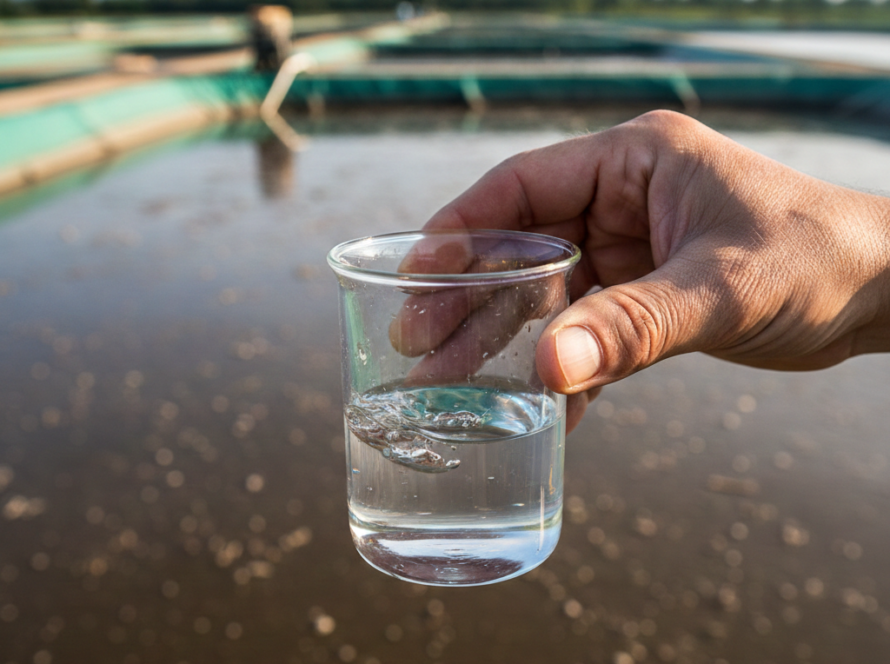
If you strip an aquaculture system down to what actually keeps it functioning, it’s not feed schedules or aerators alone and it’s definitely not human control. The real operators are microscopic. Billions of bacteria move through the water column, cling to tank walls, and settle into pond bottoms, quietly managing the chemistry that decides whether stock grows efficiently or crashes.
This microbial community governs everything that matters: how waste is broken down, how nutrients are recycled, how stable the water stays, and how effectively harmful organisms are kept in check. When these microbes are doing their job, water clears itself, toxic compounds stay in balance, and disease pressure drops. In effect, they’re a round-the-clock workforce handling sanitation, filtration, and biological security without a payroll.
That’s not science fiction, it’s basic aquaculture biology. Operations that recognize and manage these microbial systems tend to stay productive and profitable. Those that ignore them usually learn the lesson the hard way.
What’s going on beneath the surface is far more organized than it looks. Pond ecosystems depend on a wide range of bacterial communities, with major contributions from groups such as Proteobacteria, Cyanobacteria, Bacteroidetes, and Actinobacteria. Among these the helpful bacteria like Bacillus species and photosynthetic microbes play a key role in maintaining the water quality by carrying out much of the pond’s natural cleaning and stabilizing processes.
These microbes consume accumulated organic matter like uneaten feed, fish waste, decaying plants, algae, and leaf litter preventing sludge buildup and suppressing foul odors. At the same time they transform all the harmful compounds into forms that are far less dangerous to aquatic life.
Nitrogen processing is a clear example of how critical this biology is. Fish continuously release ammonia, which becomes toxic even at modest concentrations. Specialized aerobic bacteria convert ammonia into nitrite, another dangerous intermediate, and then additional bacterial populations complete the process by turning nitrite into nitrate. Nitrate is comparatively safe and can be taken up by aquatic plants and algae as a nutrient. The catch is timing: these microbial populations don’t appear overnight. Research shows it takes roughly six to seven weeks for a pond to develop a stable, functional bacterial community capable of handling waste efficiently.
When microbial communities are diverse and well established, harmful bacteria like Aeromonas and Acinetobacter are less likely to dominate the water body. The beneficial microbes thrive under these conditions and become an integral part of the pond’s food web, supporting zooplankton and benthic organisms that serve as natural feed for fish. In this way, bacteria do more than maintain water quality, they also actively contribute to the pond’s overall productivity.
How do microbes keep the water chemistry in balance?
Beneficial bacteria control nutrient levels in ways that mechanical methods cannot. Some microbial groups capture dissolved phosphorus in the water and convert it into stable calcium phosphate, which algae cannot use. By sequestering phosphorus, these microbes help prevent excessive algal growth that can harm water quality and deplete oxygen.
Some bacteria perform denitrification process, finishing the nitrogen cycle by turning nitrate into nitrogen gas, which safely escapes into the atmosphere. At the same time, gram-positive Bacillus species efficiently decompose organic waste thus converting it into carbon dioxide rather than letting it all build up as sticky biofilms or dense pond sludge.
Research from both field and laboratory studies clearly shows that the quantity and composition of bacterial populations directly affect key water quality parameters, including dissolved oxygen, pH stability, ammonia and nitrite concentrations, and overall nutrient balance. Management practices play a crucial role in this. Factors such as feeding rates, stocking density, aeration, and general pond care influence which microbes dominate, and these microbial communities and in turn control how efficiently waste is broken down and how effectively harmful pathogens are suppressed.
In reality most of the ponds are managed with the assumption that beneficial microbes will sort themselves out over time. Farmers add fertilizers, adjust feeding and hope the right bacterial populations will take the hold. The challenge is that microbial dominance doesn’t happen by chance it is shaped by numerous factors that are not always easy to manage. Changes in temperature, oxygen levels, nutrient availability, pH, and salinity all determine which bacteria will prosper and which will decline often triggering ripple effects that may not be immediately apparent.
As production intensifies, these systems can be pushed past their biological limits. High stocking densities generate waste faster than native bacteria can process it, opening the door for opportunistic pathogens such as Vibrio species. When that happens, water quality can deteriorate rapidly and stock losses follow.
Both research and practical experience highlight several reliable ways to stabilize pond ecosystems that includes maintaining proper feeding rates, routinely removing settled organic sludge, and carefully managing pH and salinity help control harmful microbes while promoting beneficial ones. Introducing commercial probiotics can accelerate the growth of helpful bacteria and enhance waste breakdown but results are not always consistent. Their effectiveness depends largely on the pond’s current conditions, management practices, and how well the probiotic strains are suited to the specific system.
Pond microbiology can’t be ignored because microbes aren’t just background players infact they control nearly every aspect of a pond’s functioning. They drive nutrient cycles, support fish nutrition, regulate water quality, limit disease, and even influence the system’s environmental footprint. Farmers who grasp how these invisible populations operate can steer conditions to favor beneficial species, keep harmful microbes in check, and build ponds that are both resilient and productive.