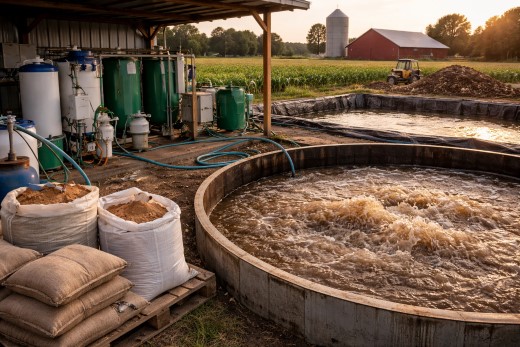
On a poultry farm located in Punjab, at 5 am, a farmer who has been operating that farm for three generations walks through the rows of his broiler house and notices something odd. All the birds are fine. They are eating, moving, and appear to be healthy; however, three weeks earlier, one batch of birds died due to a bacterial gut infection that was not detected until it was too late (i.e., before anyone could get an accurate diagnosis).
The veterinarian has again prescribed antibiotics as is the case each year prior. This time he will not find a solution to his ongoing nightmare through the product of a pharmaceutical corporation but rather by exploring the contents of the gut of his birds and by using algae that grow on a green pond.
The Antibiotic Trap:
For decades, livestock farmers have relied on antibiotics not just for treating animals with disease but also to prevent disease and promote animal growth. The impact of this usage has had detrimental effects on livestock and humans alike. The World Health Organization (WHO) refers to antimicrobial resistance (AMR) as one of humanity’s top global health threats and much of the AMR observed today is due to the overuse of antibiotics in food-producing animals. According to the publication “Frontiers in Sustainable Food Systems” (2024), long-term antibiotic use on healthy animals will result in durable bacterial resistance; the destruction of beneficial gut microbiota; and the accumulation of antibiotic residues in animal products (meat or milk) which will eventually pose a health risk to those humans who consume them.
Farmers are at a crossroads, as ceasing to use antibiotics will result in the spread of disease among their livestock, while continuing to use antibiotics will result in the gradual ineffectiveness of those antibiotics on their livestock. Therefore, a change must occur.
Enter the Microbial Revolution: Probiotics for Livestock
While the immune system is seen to be the first line of defence for our bodies, the gut is actually the first line of defence before your immune system gets to work. When we have a healthy and diverse gut microbiome, it acts as a biological barrier preventing pathogens from taking hold of us. Microbial supplements (probiotics) play an important role in this defence.
Recent research studies have demonstrated that the probiotics Lactobacillus, Bacillus subtilis, and Bifidobacterium have tremendous effectiveness when used as feed additives for livestock. According to a recently published review article in the Journal of Basic and Applied Zoology, administering large quantities of these live microorganisms can increase the ability of the immune function to develop, enhance gut health, improve feed efficiency and decrease pathogenic microorganisms such as E. coli, Salmonella and Clostridium perfringens.
The mechanisms of action are sophisticated. For example, it has been shown that Lactobacillus fermentum produces hydrogen peroxide, which creates an inhospitable environment for Staphylococcus aureus in dairy cattle. In this capacity, Lactobacillus fermentum helps to prevent mastitis. Bacillus subtilis produces secondary metabolites, including polyketides, terpenes and antimicrobial peptides, that damage the cell walls of competing pathogenic bacteria in the intestinal tract; research published in PubMed Central has confirmed these findings. Due to its competitive behaviour, Lactobacillus rhamnosus reduces Salmonella colonization in poultry through exclusion of pathogenic bacteria from occupying an ecological niche and limited by nutrient availability.
The Algae Advantage: Nature’s Immunostimulant
Another new frontier parallel with the probiotic story is fully exposed through a new world of microalgae that have been growing and photosynthesising for billions of years in the ocean’s coastal waters. Microalgae like Spirulina, Chlorella and Dunaliella salina are being recognised as powerful immune boosters for livestock and poultry. The depth of science is surprisingly deep.
According to a review published in 2024 in the Frontiers in Veterinary Science, a 5% inclusion of Spirulina platensis in the diet of broilers resulted in improved cellular and humoral immunity, as well as healthier gut microbiota. This dual action (supporting the immune system and helping to establish beneficial bacteria) makes microalgae a uniquely effective supplement.
According to review published on ScienceDirect in 2025, Chlorella vulgaris produces acidic polysaccharides which inhibit pathogen growth in the gut, while Dunaliella salina produces extracellular polysaccharides that possess immunostimulant, antiviral and some anticancer properties according to the Journal of Animal Science and Biotechnology.
The strength of the algae is their high beta-1,3-glucan content, an immunostimulant that increases lysozyme activity, complement proteins and immune-related gene expression, which means it prepares animals’ immune defence to receive protection from within when a pathogen eventually comes onto the animal.
The potential impact of probiotics in livestock may amplify through the immune response-associated impact of Lactobacillus upon the gut epithelial cells of broiler chickens, as noted in the aforementioned publication in PubMed Central, whereby Lactobacillus has been shown to impact the intestinal epithelium of chickens and upregulate the production of cytokine-type molecules that function to signal B-lymphocytes to produce antibodies. The result is an immunocompetent animal that has been “trained” and is therefore always vigilant rather than becoming chemically suppressed and then treated.
In another recent field-based study conducted on pigs and published in BMC Veterinary Research (2025), it was shown that by using an oral supplement of Ulva-derived seaweed extract prior to vaccination with the PRRS vaccine, piglets exhibited significantly higher concentrations of the IgG antibody to PRRS than piglets who were not supplemented with this product prior to the vaccine. The algal supplementation prior to vaccination provided an environment in which the PRRS vaccine worked better.
Why This Matters Beyond the Farm?
The use of algae-derived supplements along with probiotics is much more than a passing trend for utilisation as feed additives; it represents a fundamental change in the way we perceive livestock health. Instead of reacting to disease after it occurs, there is now an emphasis on creating immunity through proactive measures.
With antibiotic resistance creating a growing global health crisis, coupled with excessive globalisation and climate change-related concerns regarding the production of livestock for food to support a population of 10 billion people by 2050, using algae-derived supplements along with probiotics provides a better long-term solution than traditional practices and current research supports this.
The Punjab farmer who produces chickens, providing his flocks with the proper nutrition and support does not yet know this, but his chickens’ microbial flora (which are beneficial to their overall well-being) are the ultimate form of defence against disease.