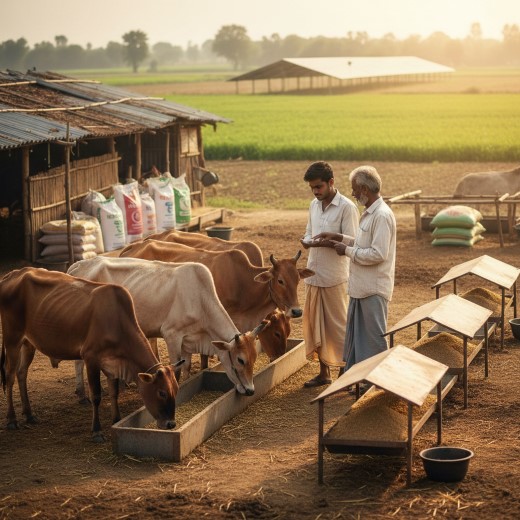
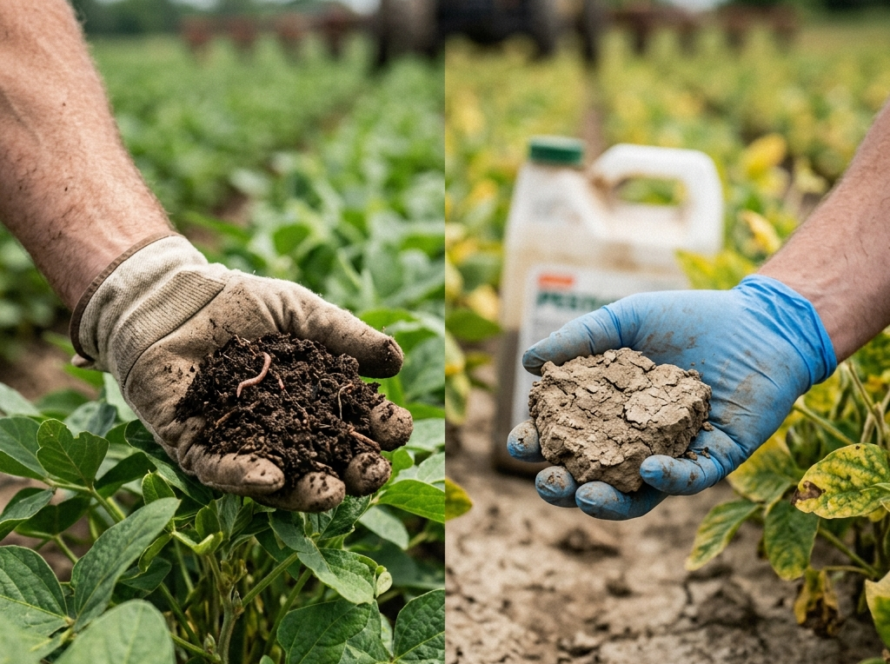
In 2024, global food production saw an unprecedented event; for the very first time ever, aquaculture surpassed wild-capture fisheries in terms of aquatic animal production (as reported in the FAO’s State of World Fisheries and Aquaculture). More people now rely on farmed seafood rather than fishing in the open ocean for sustenance.
This is extraordinary, but also serves as an omen.
For decades, aquaculture has grown rapidly as a result of a hidden paradox; farms that produce fish have utilized more wild-caught fish as feed for farmed fish. Approximately 16 million tons of fish are captured yearly from the ocean and converted into either fishmeal or fish oil for use in aquaculture resulting in the depletion of the marine ecosystems that aquaculture was intended to reduce pressure on.
Now, the aquatic industry needs to answer a pressing question:
Can we sustain the growth of aquaculture through sustainable means without depleting the oceans?
Science has established that it is possible, provided that new advancements are developed fast enough.
Why Fishmeal Is Aquaculture’s Biggest Sustainability Problem?
The highest quality aquaculture feed ingredient is Fishmeal, which consists of ground, dried, and processed fish. Fishmeal contains all necessary amino acids to feed fishes effectively, as well as being highly digestible, containing essential fatty acids, and being naturally tasty. The challenge of this high-quality fishmeal is that there are not enough to meet the current and projected needs.
According to EIT Food, over 69% of the world’s fishmeal/75% of the world’s fish oil is consumed by farmed fish. The majority of fish that are currently harvested to produce fishmeal come from small fish known as forage fish (e.g. anchovies, herring, sardines, menhaden). Due to the increase in global fish demand estimated at 75%, from 49.7 million tons in 2015, to 87.1 million tons by 2025 (ScienceDirect, 2024), therefore at current levels of harvesting all available forage fish will not be enough to meet future demand for fishmeal. The projected timeframe for this to occur is as early as 2037.
The challenge facing the aquaculture industry is creating more fish for human consumption with fewer wild fish. This is the sustainability challenge facing the aquaculture industry.
Fishmeal Alternatives: What Science Has Validated
The search for fishmeal replacements has accelerated dramatically, and several candidates have now moved from lab to commercial scale:
Insect Meal: Black Soldier Fly Larvae (BSFL), otherwise known as Insect Meal, convert food waste into protein-dense biomass at a much lower cost in terms of land and water. With commercially viable inclusion rates in aquafeeds as high as 30% for multiple species, NOAA Fisheries has determined that sablefish that were fed mealworm-based diets grew to the same size as sablefish that were fed fishmeal-based diets; thereby confirming that insect protein is a nutritionally equivalent replacement for fishmeal. According to S2G Investments (2026), algae fermentation producer Mara Renewables has displaced the equivalent of 6.7 billion anchovies from the global supply chain since 2024 through the production of omega-3 (algae-derived) products.
Microalgae: Microalgae are the foundational source for all omega-3 fatty acids found in marine organisms. Algae fermentation has the ability to produce fish oil (EPA & DHA) without utilizing wild-caught fish as part of the production process. Microalgae were able to replace 100% of fishmeal protein in carp trials and up to 95% of fishmeal protein in shrimp/catfish trials (as per Sustainability Directory 2025). In a trial conducted by researchers at Ocean Era (Hawai’i), an entirely plant-based diet was used with no fishmeal or fish oil, which was confirmed by NOAA Fisheries to provide the same nutritional benefits to farmed fish raised on an entirely plant-based diet as were achieved by feeding them on an all fish-food diet.
Single-Cell Proteins and Fungi: Single Cell Proteins Bacterial and fungal protein produced from fermentation processes using food manufacturing waste are new frontiers. Projects funded by EIT Food aim to develop and produce domestically available fungi proteins to replace soybean and fishmeal as sources of protein feed for livestock without using marine resources, arable land or animals.
Sustainable Production Systems: RAS, IMTA, and AI
The feed system isn’t the only front. How fish are farmed is equally critical.
Recirculating Aquaculture Systems (RAS):
Also known as Closed-Loop Water Recycling (CWWR) the current state of Recirculating Aquaculture Systems (RAS) helps reduce negative environmental impacts caused by ocean farms through land-based closed-loop Water Recycling systems. In their report published by Frontiers in Aquaculture, this article highlights that between 2020 and 2025, advancements related bioflitration, and microalgae Integration and Artificial Intelligence (AI) based water quality monitoring systems have transitioned RAS from experimental to viable commercial Systems which have reduced labour Costs of 25%-30% and Improved Feed Efficiency of 15%-20%.
Integrated Multi-Trophic Aquaculture (IMTA):
Integrated Multi-Trophic Aquaculture (IMTA) is a form of aquaculture that uses fish, seaweeds and bivalves. Instead of polluting the water column, nutrient outputs from one species are used as feed inputs for others, providing much of the same efficiency as natural marine food webs. According to Frontiers in Aquaculture (2026), IMTA and aquaponics producers are using artificial intelligence (AI) and IoT sensors to implement automated real-time nutrient cycling management.
AI-driven precision feeding:
The third significant waste stream is linked to overfeeding. Using AI cameras and predictive analytics, companies like ReelData deliver feed at a rate that reflects the real-time appetite of fish, which reduces feed waste as well as its environmental impact substantially, according to S2G Investments (2026).
Sustainable Aquaculture: The Case for Species Selection
The type of aquaculture being practiced will vary widely depending on what species are chosen. The University of British Columbia’s Institute for Oceans and Fisheries says that by choosing to farm species lower down our planet’s food chain–bivalves, seaweed and herbivorous fish–we reduce the ecological footprint of aquaculture while also producing more food. Shellfish and seaweed are fed no additional feed inputs beyond what they filter out of the ocean, actively clean our oceans through the filtering of seawater, and absorb carbon from the atmosphere; therefore, they are the most ecologically beneficial type of aquaculture available.
For carnivorous species, the use of alternative feedstuffs combined with recirculation aquaculture systems (RAS) technology and integrated multi-trophic aquaculture (IMTA) practices has created production efficiencies that have previously been impossible to achieve within the last decade; specifically, high density (5,000 fish per cubic metre), high yield (300,000 fish per ton of biomass), and net zero environmental discharge (waste).
Sustainable Aquaculture at a Glance
|
Innovation |
Sustainability Benefit |
Commercial Status |
|
Black soldier fly meal |
Converts food waste to protein; replaces 30% fishmeal |
Commercial scale (2024) |
|
Microalgae / algal oil |
100% fishmeal + fish oil replacement; no wild fish |
Scaling rapidly (2024–2025) |
|
RAS closed-loop systems |
Eliminates waste discharge; biosecure |
Widely commercial |
|
IMTA systems |
Nutrient recycling; multi-species waste reuse |
Growing adoption |
|
AI precision feeding |
Reduces feed waste; improves FCR |
Actively deployed |
Frequently Asked Questions About Sustainable Aquaculture
Q: Does aquaculture actually help reduce pressure on wild fish stocks?
A: Yes, it does. As per the University of British Columbia (2024), aquaculture has been found to reduce pressure on over-exploited wild fish stocks, augment depleted populations, and combat destructive fishing practices such as bottom trawling.
Q: Can fish be farmed without any fishmeal or fish oil?
A: Yes, they can. As per a study by researchers at Ocean Era, a completely fish-free diet has been developed for almaco jack, utilizing algae-based oil. In fact, microalgae have been used to replace 100% of fishmeal protein in carp diets. For salmon, however, this is still not possible.
Q: What is the most sustainable aquaculture species to farm?
A: Bivalves such as oysters, mussels, and clams, as well as seaweed, have no feed requirements, are great at cleaning up the environment, and are efficient at producing protein. Amongst finfish, herbivores or omnivores such as tilapia or catfish have a much lower environmental impact than carnivores such as salmon.
The Bottom Line
The concept of sustainable aquaculture is not a dream; it is a reality in action. Insect meal replacing billions of forage fish, microalgae making fish oil without touching the ocean, RAS eliminating effluent from fish farming, IMTA closing nutrient loops in farming all of these innovations are not dreams; they are a reality.
The oceans do not need to be depleted to feed a hungry planet. They need to be protected as aquaculture, designed and fed differently and precisely, takes over the job.