The future looks grim for most of the usual kinds of plastics used. About 55% of all the plastic wastes around the world find their way to either landfills or into the natural environment, where they break down into microplastics on timescales that far exceed those of human civilization itself.
Bioplastics were supposed to be the savior, but the devil was in the details once again. Polylactic acid (PLA), long the main bioplastic used in the industry, will degrade only under conditions exceeding 55 degrees Celsius.
But PHAs work under totally different assumptions about material use and disposal, ones that are very close indeed to what circular economies ask of materials.
What “Circular” Actually Requires from Packaging
The term circular economy encompasses more than simply being recyclable. It implies that a material can go through an entire cycle (closed loop) i.e. from production (input), to use, and back into the system as a usable resource typically several times without leaking any toxins during the whole manufacturing process. Packaging considered to be reusable in a circular economy must either re-enter the material flow (recycling), or be able to re-enter the biological flow (biodegrade to carbon, water and biomass).
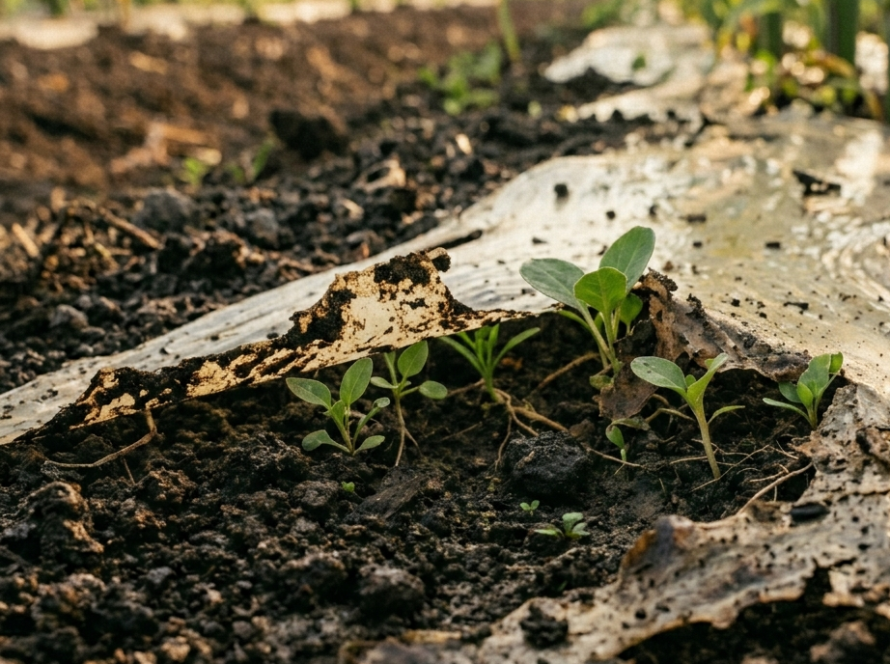
PHA represents this dual function, with the ability to be both mechanically recycled like a thermoplastic, anaerobically digested to create biogas and digestate, or biodegraded within terrestrial, freshwater, or oceanic environments without microplastic contamination or harmful by-products.
The flexibility of this material is not just a theoretical concept. The 2025 life cycle review in PMC revealed that PHA’s various pathways to its end of life, whether through biodegradation, anaerobic digestion, or chemical recycling, all facilitated the efficient re-use of material in nature’s carbon cycle. Life cycle analyses consistently demonstrated lower greenhouse gases, decreased use of fossil fuels, and lower marine eutrophication than conventional plastics.
The Market Is Catching Up
According to a report by Grand View Research, the global zero-waste packaging market in 2024 will reach $288 billion and grow at a rate of 10% a year until 2033. Within this sector, the biopolymer section is also experiencing an increase at a rate of 11.1% per year. Regulatory momentum is acting as an additional benefit; in 2024, the European Union (EU) will pass legislation known as The Packaging and Packaging Waste Regulation (PPW) that will require all types of packaging to be either reusable or recyclable by the year 2030. The UN’s global plastics treaty framework signed into effect in 2024 has now encouraged governments to issue biodegradable product certification only after they have been verified scientifically, rather than through purely promotional claims.
This is a gap that PHA addresses because the other two types of bioplastics available on the market are either compostable only theoretically (PLA) or biodegradable only in aqueous media (starch blends). PHA is the only commercialized biopolymer proven to be biodegradable in soil, freshwater, seawater, home and industrial composting systems.
The Waste-In, Value-Out Production Loop
What makes the story of PHA’s circular economy truly exciting is the raw materials used to produce PHA. While traditional plastics begin from virgin fossil-based materials, PHA is produced through biosynthesis using microorganisms that consume organic materials as their food sources. These organic materials do not have to be agricultural.
According to a ScienceDirect review conducted in 2025, PHA derived from food waste may be produced using a variety of feedstocks, including crude glycerol (a byproduct of biodiesel), waste cooking oil, waste animal fat, and agricultural residues like whey and brewery bagasse. A specific study indicated that carboxylate mixtures produced from food waste produced 55% greater yields of PHBV than glucose. The raw material for PHA production will be food waste, and the packaging material produced from PHA will feed the ecosystem after its usefulness has ended.
PHA’s Closed-Loop Lifecycle
- Waste feedstocks: Crude glycerol, cooking oil, animal fats, agri-residues converted to fermentation substrate.
- Microbial synthesis: Bacteria accumulate PHA granules as energy reserves, no fossil carbon required.
- Packaging use: Rigid containers, films, coatings, foodservice ware — performs like conventional plastic.
- End-of-life return: Biodegrades in soil, marine, compost or enters anaerobic digestion for biogas.
How Terrapha is Building This Loop from the Ground Up
TerraPHA is an emerging biotechnology company engineering PHA production specifically to close the waste-to-value loop and not just produce a bioplastic, but produce one whose entire supply chain embodies circular economy principles.
Fermentation edge: Proprietary process achieves 4–5× higher cell densities than conventional fermentation i.e. more PHA per batch, lower cost per kilogram.
Waste-first inputs: Crude glycerol from biodiesel, used cooking oil, animal fats, insect fats, and agricultural sugars; zero competition with food supply chains.
Dual extraction: Both mechanical/enzymatic and biological recovery methods maximize PHA yield while minimizing processing waste.
End-of-life certified: TerraPHA’s PHA meets biodegradation standards across industrial compost, home compost, soil, and marine environments
For brands targeting zero-waste certifications or EU PPWR compliance, TerraPHA provides a material that doesn’t require infrastructure compromise it works wherever the packaging ends up. The waste-in, value-out loop closes at both ends.
Frequently asked questions
Q: How does PHA actually fit into a circular economy model isn’t biodegradable packaging just a linear system?
It’s certainly a valid point. “Biodegradable” stands for linear systems – produce, consume, and then get rid of it. Yet, in the case of PHA, two features define the process of its lifecycle which is the material comes from waste flows (glycerin, cooking oil, food leftovers), meaning the very start is the process of salvaging something useless, and in the end PHA will put back the carbon and other resources into the biological circle, while not adding anything to the pile of trash or sea garbage.
Q: Can PHA packaging help brands meet EU PPWR and UN plastics treaty requirements?
Yes and that too more than many other choices. The EU Packaging and Packaging Waste Regulation mandates that all packaging should be recyclable or reusable by 2030, and compostability certification counts towards this goal. PHA has been certified as compostable in industrial composters, at home, in soil, and in the ocean. The international UN plastics treaty agreement, completed in 2024, explicitly emphasizes scientifically validated biodegradability rather than simply marketing jargon, which PHA satisfies via internationally certified testing through TÜV Austria and ASTM.
Q: Why is PHA production still more expensive than conventional plastic, and is that changing?
The current cost of producing PHA is estimated at about $4-$6 per kg in comparison to $1-$2 per kg for traditional PE and PP, mostly owing to high energy costs for fermentation, extraction processes, and feedstock supply. The gap, however, is being addressed through the confluence of three major approaches: feedstock derived from wastes (and, thus, excluding high costs of virgin sugars), fermentation technology (including techniques involving high cell density resulting in higher amounts of PHA per fermentation run), and new extraction techniques using eco-friendly solvents and enzymes.