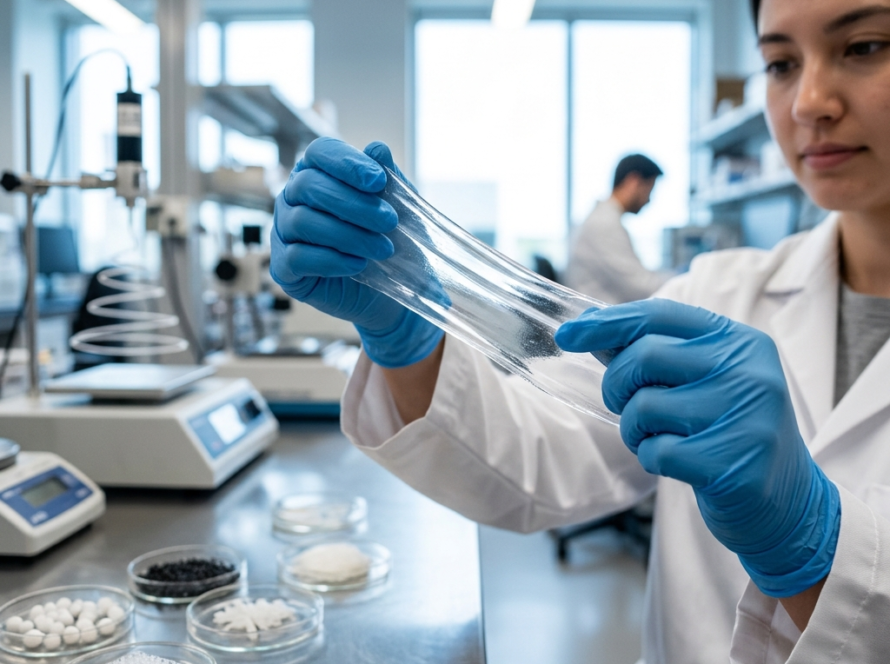
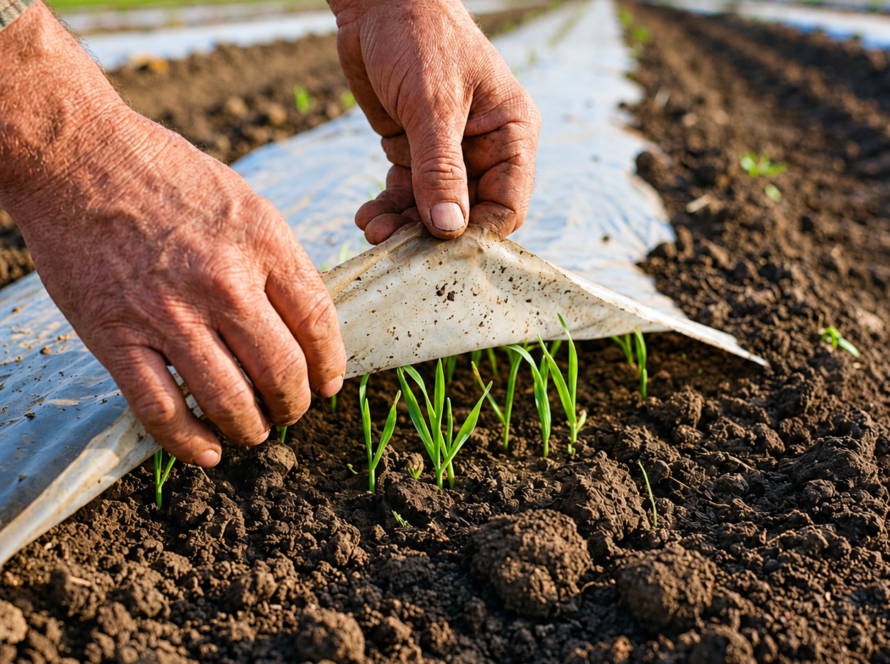
Polyhydroxyalkanoates, or PHAs, have been the most promising answer to plastic pollution for over a decade. They are fully biodegradable, produced by the microbes, and chemically similar to conventional plastic to actually be able to replace it.
Yet the grey area between a successful lab fermentation and a commercially viable production line remains one of the reasons PHA has taken this long to reach the shelves. Years of research data on fermentation and pilot-scale trials, point towards to some hard truths that we’d be covering.
Point One: Oxygen
At bench scale, feeding oxygen to a culture producing PHA is trivial. At production scale, it becomes the defining engineering constraint. Research on bioreactor operating strategies confirms that PHA productivity in fed-batch systems is almost always limited by the bioreactor’s oxygen transfer rate. This limitation worsens as the vessel grows larger (Bioreactor Operating Strategies for Improved Polyhydroxyalkanoate Productivity, 2018).
This is the reason why researchers exploring waste plant and animal oils as PHA feedstocks describe carbon source cost as one of the major constraints on scaling up production.
Point Two: Feedstock
A feedstock that produces excellent PHA yields can still fail commercially because of the source cost. It is mostly the largest single line item in production economics. With glucose alone accounting for a major share of total cost (Polyhydroxyalkanoates: Key Challenges in Production and Sustainable Strategies for Cost Reduction, 2025).
This is why researchers exploring waste plant and animal oils as PHA feedstock describe carbon source as one of the major constraints on scaling up production in the first place.
Point Three: Fed-Batch
Switching from simple batch to fed batch fermentation has repeatedly shown gains. Reviews report PHA yield increases up to 30% under optimized, nutrient-controlled fed-batch conditions compared to standard batch systems.
A pilot study using solid waste animal fat as feedstock illustrates both the promise and the drop-off at scale. Laboratory scale cultivation achieved 45 grams of PHA per litre using a continuous feeding strategy, a 70% improvement over earlier reported methods, but scaling that same process to a 150-litre pilot reactor brought yield down to 31.5 grams per litre (Continuous Feeding Strategy for Polyhydroxyalkanoate Production From Solid Waste Animal Fat at Laboratory- and Pilot-Scale, 2023). The strategy worked but scale still took a bite out of performance, exactly as bioreactor engineering theory predicts.
Myth vs Fact
Most people assume that if a fermentation process works well in the lab, it will work the same way at industrial scale. But a review of microbial community-based PHA research found only 19 pilot-scale installations reported in the scientific literature to date, out of a far larger number of lab-scale studies (Scaling-Up Microbial Community-Based Polyhydroxyalkanoate Production: Status and Challenges, 2021) – a visible drop-off between promising lab data and real pilot-deployment.
How TerraPHA Helps
As World’s first commercial non- GMO biopolymer company, TerraPHA used naturally occurring microbial systems rather than engineered strains, paired with precision-controlled fermentation conditions designed specifically to support consistency and scalability rather than lab-only performance.
Just as importantly, TerraPHA’s process is built to flexibly use a wide range of renewable carbon sources instead of depending on a single costly feedstock, directly addressing the cost bottleneck that research repeatedly flagged as the deciding factor in commercial viability.
The Takeaway
The published records on fermentation from the last few years is consistent. PHA doesn’t fail because biology is wrong, it fails because oxygen transfer, feedstock economics, and feeding strategy don’t survive the jump from flask to tank untouched. Any company serious about commercial PHA production has ti design for these constraints from day one and not discover them at the 1,000-litre mark.
Frequently Asked Questions
Why is scaling up PHA fermentation so much difficult than lab-scale production?
It is mainly because of oxygen transfer. Bench-scale reactors can supply oxygen easily, but as reactor volume grows, delivering enough oxygen to a dense microbial culture becomes an engineering challenge that can quite dramatically require more power input per unit volume (Bioreactor Operating Strategies for Improved Polyhydroxyalkanoate Productivity, 2018).
Does a higher lab yield always mean a commercially viable process?
No. Feedstock (carbon source) cost is frequently the largest cost driver in PHA production, so a high-yield process on expensive glucose can still be commercially unviable compared to a moderate yield process on cheaper renewable waste streams.
How much does yield typically drop when moving from lab to pilot scale?
It varies by process, but published pilot scale data shows meaningful drops are common. One continuous feeding PHA process fell from 45 g/L at laboratory scale to 31.5 g/L at 150-litre pilot scale, even though the underlying strategy was sound (Continuous Feeding Strategy for Polyhydroxyalkanoate Production From Solid Waste Animal Fat at Laboratory- and Pilot-Scale, 2023).
References
Bioreactor operating strategies for improved polyhydroxyalkanoate (PHA) productivity. (2018, October 26). Polymers, 10(11), 1197. https://doi.org/10.3390/polym10111197
Can polyhydroxyalkanoates be produced efficiently from waste plant and animal oils? (2020, February 19). Frontiers in Bioengineering and Biotechnology. https://www.frontiersin.org/journals/bioengineering-and-biotechnology/articles/10.3389/fbioe.2020.00169/full
Continuous feeding strategy for polyhydroxyalkanoate production from solid waste animal fat at laboratory- and pilot-scale. (2023). PMC. https://www.ncbi.nlm.nih.gov/pmc/articles/PMC9871520/
Polyhydroxyalkanoates (PHAs): Key challenges in production and sustainable strategies for cost reduction within a circular economy framework. (2025, May 15). ScienceDirect. https://www.sciencedirect.com/science/article/pii/S259012302501415X
Scaling-up microbial community-based polyhydroxyalkanoate production: Status and challenges. (2021, February 8). ScienceDirect. https://sciencedirect.com/science/article/pii/S0960852421001292