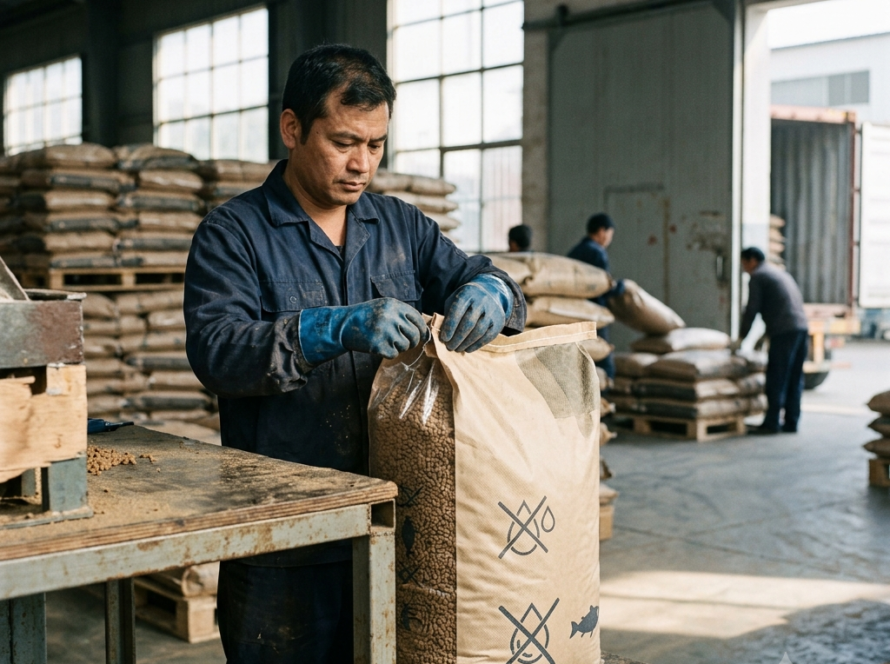
Most of the shoppers would never notice any kind of change or a shift in the packaging procurement.
On 12 August 2026, the European Union started applying Regulation (EU) 2025/40, also known as the Packaging and Packaging Waste Regulation. This new regulation replaces the packaging rules that had been followed since 1994. Earlier, buyers mainly focused on the cost of packaging materials, such as the price of film per kilogram. Now, they also need to think about what happens to the packaging after the customer uses and throws it away.
Now we land on another question that is where polyhydroxyalkanoates, or PHA, enter this scenario.
Polyhydroxyalkanoates (PHA)
PHA is a biopolymer that some bacteria manufacture inside their own cells as an energy reserve. It is very similar to the way humans store fat in their body. And it all begins with the right microbe and the right carbon feed source. The granules of the biopolymer produced by the microbe can be further harvested, dried, pelletised and run on the extrusion and thermoforming lines.
Since, the biopolymer is created by microbes naturally, they are capable of getting degraded naturally as well. Enzymes released by ordinary soil and marine bacteria cut the polymer chains without needing the fancy technicalities of an industrial setup.
A 2025 review in Frontiers in Microbiology recorded PHB films losing 58% of their mass in seawater across 160 days, with copolymer films close behind at 54% (Paloyan et al., 2025). Another review in Biodegradation, covering fresh water, seawater, soil, home composting and anaerobic digestion, found breakdown occurring in every one of those setting, though the speed swings widely with monomer type, polymer microstructure and whichever microbes happen to live there (Koller et al., 2025).
This point is important to understand.
PHA does not mean that people can throw packaging anywhere. Instead, PHA is designed to break down more safely when proper waste collection and disposal systems are not available.
Global bioplastic production capacity reached 2.31 million tonnes in 2025, against roughly 431 million tonnes of plastic produced worldwide, about 0.5% (European Bioplastic, 2025).
PHA In Supply Chain
Its substitution lies in three places where conventional plastic performs poorly.
Thin, food-contaminated films are the first.
A sandwich wrapper or a produce bag carries too little polymer and too much of organic residue. It goes to the landfill or incinerator regardless of what it is made from. A PHA film in that position exists through the organic waste stream of the residual one.
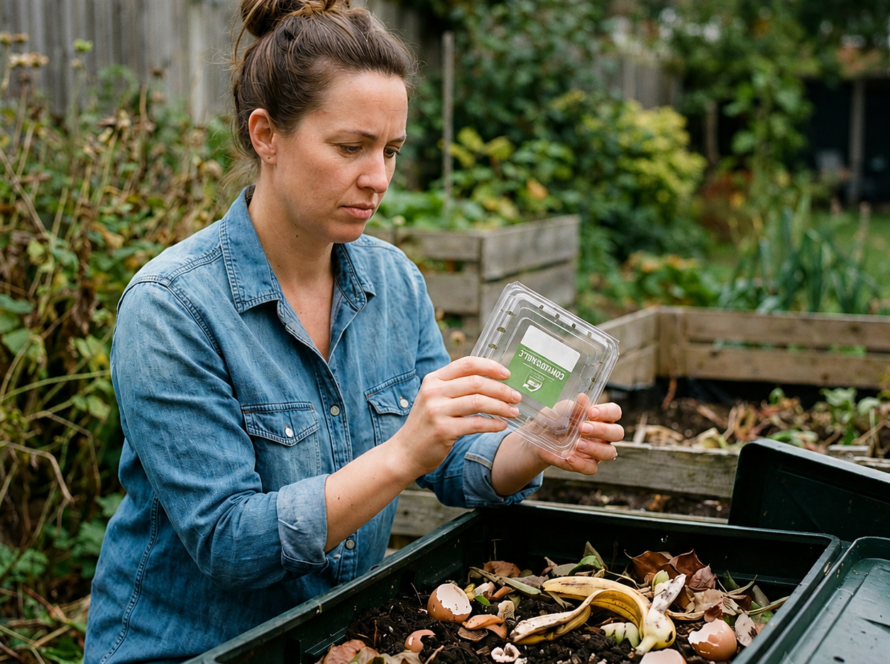
Small format items that always escapes the collection are the second. Under Article 9 of the new EU regulation, tea bags, filter coffee pads and the sticky labels on fruit and vegetables must be compostable by 12 February, 2028. No sorting line was ever going to recover them.
Coatings on paper and board are the third and the largest. A paper cup needs a moisture barrier, and the thin polyethylene layer that supplies it usually disqualifies the whole item from recycling.
The regulation also adds a steady pressure on top of it. Packaging waste per person must fall 5% by 2030, 10% by 2035, and 15% by 2040 against a 2018 baseline, and from January 2030 packaging that is less than 70% recyclable cannot be sold in the EU.
How TerraPHA Fits
TerraPHA is the world’s first non-GMO biopolymer company to produce PHA using naturally occurring microorganisms. It uses precision fermentation processes to make sure the material is produced consistently and can be made on a larger scale.
Another important feature of TerraPHA’s technology is that it can use different renewable carbon sources as raw materials instead of depending on only one type of feedstock. This flexibility makes the production process more adaptable.
The PHA material is also designed to biodegrade, and this property comes from the actual chemical structure of the polymer, rather than being only a marketing claim.
Frequently Asked Questions
Is PHA the same thing as PLA?
No. PLA is polymerised chemically from lactic acid and require industrial composting conditions to break down. On the other hand, PHA is produced inside bacterial cells and is degraded by enzymes from bacteria found in soil and seawater, without needing an industrial facility (Koller et al., 2025).
Will PHA packaging break down in the ocean?
It degrades far faster than conventional plastic, but not instantly. Trials in seawater showed PHB films losing 58% of their mass over 160 days; the rates vary with temperature, depth and local microbial populations (Paloyan et al., 2025). But marine biodegradability factor should not be treated like a disposal plan.
Do I need to buy new machinery to run PHA?
Usually not. PHA is a thermoplastic and runs on conventional extrusion, film and thermoforming equipment, though temperature profiles and drying steps need adjustments. Always ask the supplier for grade-specific processing data before the first trial.
Reference
Atarés, L., Chiralt, A., González-Martínez, C., & Vargas, M. (2024). Production of polyhydroxyalkanoates for biodegradable food packaging applications using Haloferax mediterranei and agrifood wastes. Foods, 13(6), 950. https://doi.org/10.3390/foods13060950
European Bioplastics. (2025, December 2). EUBP presents the results of the 2025 market data report. https://www.european-bioplastics.org/eubp-presents-the-results-of-the-2025-market-data-report/
European Parliament & Council of the European Union. (2024). Regulation (EU) 2025/40 of the European Parliament and of the Council of 19 December 2024 on packaging and packaging waste, amending Regulation (EU) 2019/1020 and Directive (EU) 2019/904, and repealing Directive 94/62/EC. https://eur-lex.europa.eu/eli/reg/2025/40/oj
Koller, M., Heeney, D., & Mukherjee, A. (2025). Biodegradability of polyhydroxyalkanoate (PHA) biopolyesters in nature: A review. Biodegradation, 36(4), 76. https://doi.org/10.1007/s10532-025-10164-y
Paloyan, A., Tadevosyan, M., Ghevondyan, D., Khoyetsyan, L., Karapetyan, M., Margaryan, A., Antranikian, G., & Panosyan, H. (2025). Biodegradation of polyhydroxyalkanoates: Current state and future prospects. Frontiers in Microbiology, 16, 1542468. https://doi.org/10.3389/fmicb.2025.1542468