Introduction
Do you know what’s emerging as one of the most promising tools for enhancing soil health?
It’s our very own biopolymers. And all this because of their ability to support, stimulate, and sustain microbial activity.
Trillions of bacteria, fungi, and other microscopic organisms are working 24/7 underground and biopolymers are helping them. They’re literally feeding the underground ecosystem and turning dead soil into thriving microbial metropolises.
Biopolymers: Not Passive, but Active Soil Engineers
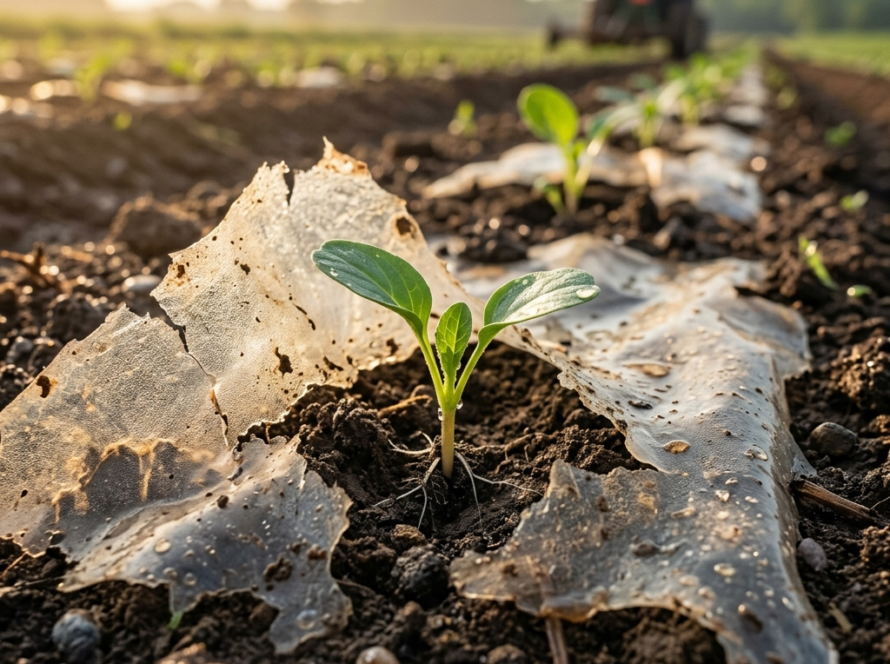
Biopolymers like chitosan, alginate, cellulose, and microbial extracellular polymeric substances aren’t just sitting statically in the soil doing nothing. They’re actively reshaping how soil microbes interact, multiply, and function.
One thing about soil microbes that you must know is they’re constantly hungry.
And guess who’s the microbial feast?
Biopolymers. Right.
Biopolymers as Food and Housing for Soil Microbes
Biopolymers serve as both food and housing for these microscopic communities.
When chitosan (derived from crustacean shells) enters the soil, the soil bacteria and fungi recognize it as a carbon and nitrogen source and immediately utilize and break it down through enzymatic activity. Whenever these microbes feast on biopolymers, their population explodes.
Studies demonstrate that chitosan-amended soils show enhanced microbial biomass and activity compared to the untreated soils.
Selective Stimulation: Boosting Beneficial Microbes, Suppressing Pathogens
The most amazing thing about this system is that biopolymers help to feed beneficial microbes while simultaneously suppressing pathogenic ones too.
Chitosan’s antimicrobial properties are known to selectively inhibit the harmful fungi and bacteria, creating such an environment where all the good microbes thrive and the bad ones struggle — just like a biological warfare where the good guys are winning.
EPS: The Hidden Architect of Soil Structure
Now let’s talk about EPS, these are the extracellular polymeric substances that microbes produce by themselves. These are game-changers for soil structure and function.
Some bacterias like Bacillus, Streptomyces, and Pseudomonas species naturally secrete polysaccharide-rich EPS that act as binding agents, turning soil particles together into stable aggregates. This aggregation helps to creates pore spaces that improve water infiltration, root penetration, and oxygen availability.
In arid environments, cyanobacteria produce EPS that stabilize soil surfaces, reduce erosion, and improve fertility.
Also, fungal hyphae, coated in their own biopolymer secretions, create networks that transport water and nutrients while providing highways for bacterial movement.
Biopolymers and Nutrient Cycling
Biopolymers also help in nutrient cycling.
When the biopolymers breaks down they release carbon, nitrogen, and other nutrients that helps to fuel the microbial metabolic activity.
Enhancement in the microbial activity leads to faster decomposition of organic matter, better nutrient mobilization, and improved plant nutrient uptake.
But There’s a Catch: Soil Conditions Matter
But here’s a catch as well. Not all biopolymers behave exactly in the same way in every type of soil.
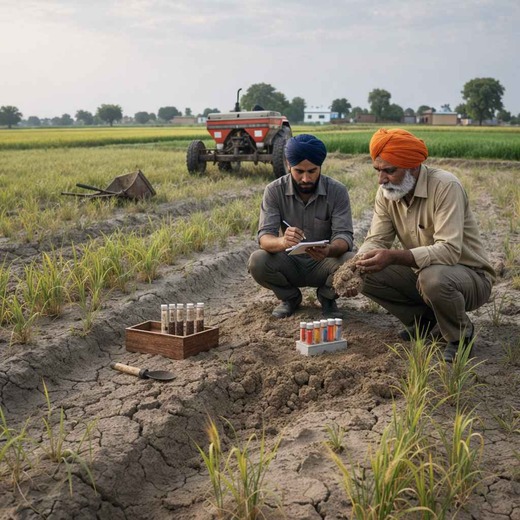
Factors including pH, moisture content, temperature, and existing microbial populations influence on how effectively biopolymers boost the microbial activity.
In some soils we might observe explosive microbial growth, while others show moderate improvements.
The molecular weight and chemical structure of biopolymers also matter, for example, chitosan with low-molecular-weight often performing better than high-molecular-weight versions.