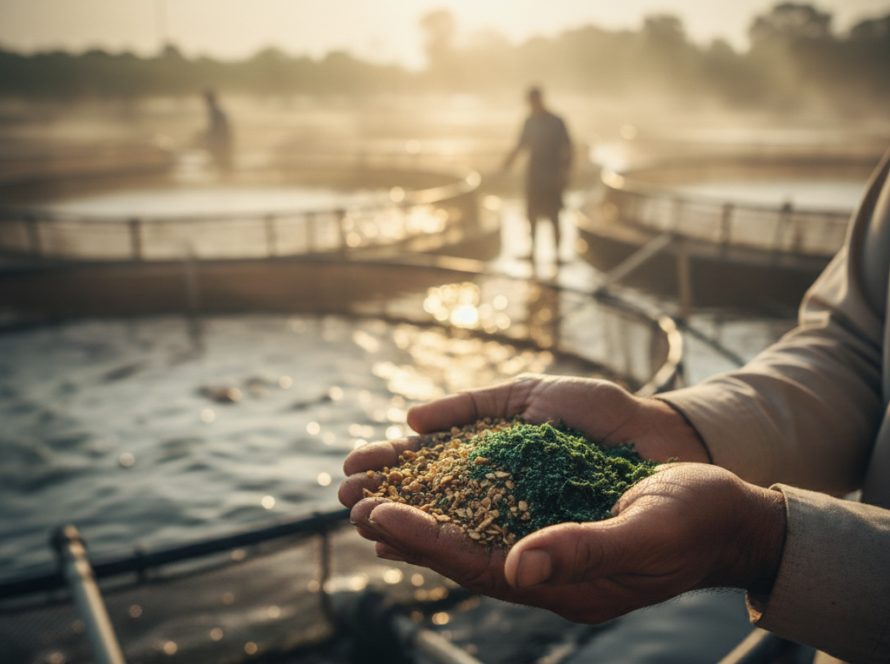
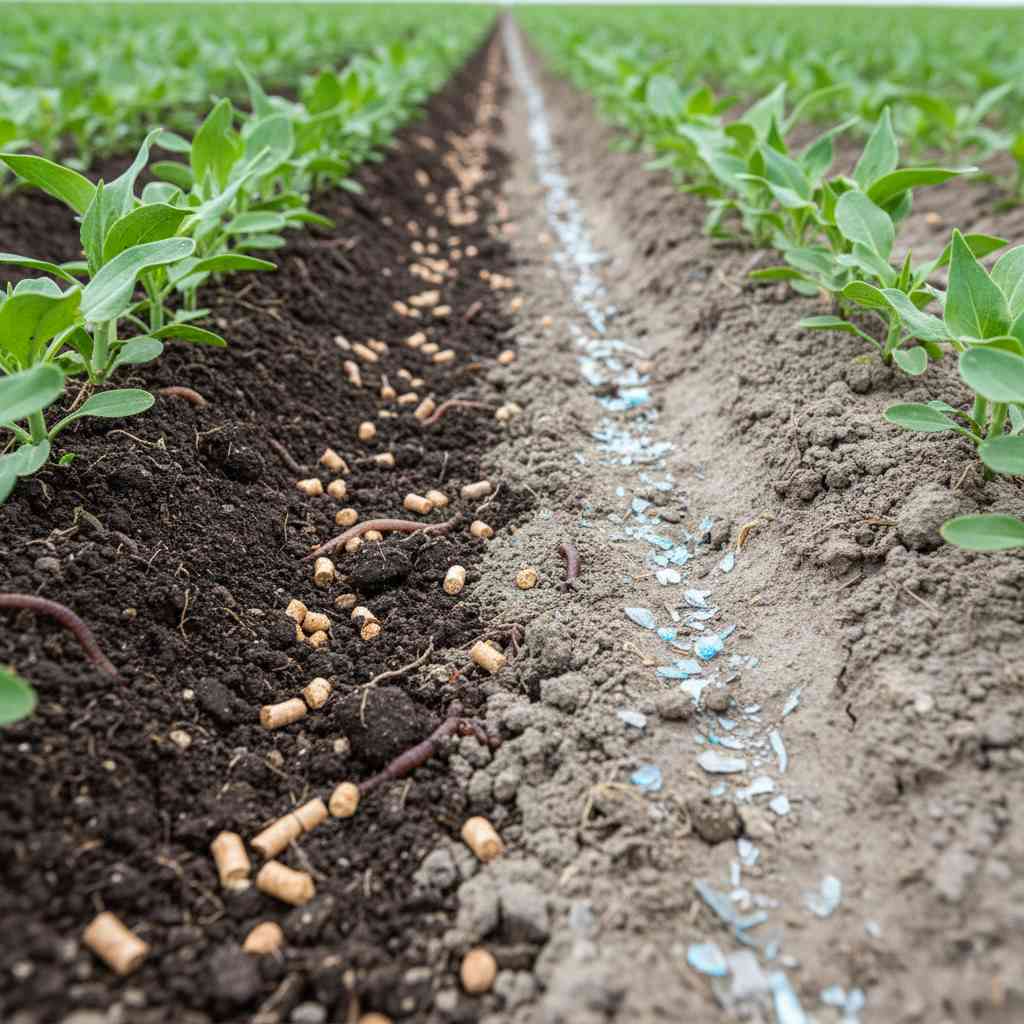
Soil strength is not an input, it’s a nutritional balance. While organic matter is crucial, true resilience is achieved through the supply of a full spectrum of minerals that fuels plant and microbial biochemistry. Large-scale soil surveys, reported in plant science literature, indicate that almost half of the world’s cultivated land is acidic, making critical elements such as calcium, magnesium, boron, and potassium unavailable. Nutrient programs focusing on isolated nutrients result in soils that are chemically imbalanced and biologically fragile, crops can thus be quickly overcome by stress or disease. Multi-mineral nutrition provides functional stability that allows soils to recover from drought, salinity, and climatic extremes. This is the foundation of soil resilience-and mineral diversity makes it possible.
The mineral interaction framework:
The benefit of multi-mineral nutrients is that each mineral is more effective as part of the group than as an individual component. In soil-plant relationships, minerals create networks wherein the presence or absence of one mineral may affect the availability, mobility, or biological function of other minerals. Research on the nutritional needs of plants has indicated that boron has a coordination function with calcium, nitrogen, phosphorus, potassium, and zinc that enhances the adaptability of plants to environmental changes.
Field and greenhouse experiments on joint calcium, magnesium, and boron application have shown positive effects, such as enhanced vegetation growth, resistance to adverse climatic conditions, and improved soil physical properties. Magnesium has been found effective in ensuring effective photosynthesis and nutrient movement, and boron has been found effective in ensuring cell wall development and membrane integrity, leading to collectively improved root function and nutrient use efficiency. Other experiments have shown that mixtures of micronutrients like boron, manganese, and zinc can decrease adverse effects of salt-sodic soils on plant development.
In addition to plant nutrition, one of the key roles of minerals is related to stability in the soil ecosystem. The role of materials science and soil biology study is evidenced by the reactive surface of the mineral, whose influence in governing microbial processes, carbon turnover, and stabilization in the soil ecosystem has been highlighted. This mineral acts as a biochemical and physical anchor in the soil.
Balanced mineral nutrition goes beyond mere growth promotion and is a critical defense against chemical soil stressors. Some minerals actively restrict the uptake and root-to-shoot mobilization of toxic elements, which therefore diminishes their toxic impact on plant tissues. Plant physiology research has shown that sufficient boron supply decreases the levels of phytotoxic metals like cadmium and aluminum while at the same time mitigating growth inhibition caused by toxicity. This is related to the function of boron in cell wall maintenance that restricts aluminum binding and reduces its concentration in the root system.
This is further enhanced through synergistic interactions between minerals. Experimental evidence indicates the improved germination of seeds and vigor in early seedlings under saline conditions when availability of boron and calcium occurs together. Together, these elements reinforce cell wall stability and membrane function, supporting key physiological processes when plants are exposed to environmental stress. Through these coordinated mechanisms, multi-mineral nutrition provides a kind of built-in safeguard, enabling crops to maintain normal development even when growing in chemically challenging soils.
Ensuring multi-mineral nutrition helps to improve soil resilience by triggering a biological engine functioning below the soil surface. If a good mineral resource is available in the soil, beneficial microbes become more active and show diversity in their functionality, leading to improved nutrient cycling and buffering capacity. Plant-soil studies establish the fact that mineralized soil systems, when combined with high mineral uptake capability crops, give better yields even in low-fertility soil and improve environmental tolerance.
Further evidence through genomic and physiological research helps unveil the fact that the absorption of minerals under harsh climatic conditions helps in the direct reduction of stress response in plants. This is because these minerals ensure the stability of metabolic processes, reduce physical damage caused by abiotic factors, and enhance the survival of the plants under stressing conditions. This process works in tandem since minerals induce the growth and activity of microbes, and the microbes in turn solubilize or convert the minerals into forms amenable for absorption.
With growing volatility in climate, agroecosystems today are being stretched beyond their former boundaries. And with more frequent occurrences of drought, floods, salinization, and temperature variability, what is required is soil resilience to bounce back rather than succumb to adversity. Multi-institutional studies prove that with balanced mineral components in soil management, soil can improve in structural resilience, efficiency in biology, and adaptability to climate variability. The balanced soil nutrition enables soil to function effectively amidst climate variability and bounce back rather rapidly, this makes multi-mineral soil management a necessity rather than a practice in agroecosystems today.