Let’s flip the question.
What if the greatest untapped resource on a farm isn’t the crop but the waste?
Every day, farms generate massive amounts of residues, manure, rejects, effluents, and packaging scraps. The majority of it is considered a disposal issue, a cost center with environmental hazards associated with it.
According to data cited through ScienceDirect, untreated agricultural waste is the cause of emissions, water pollution, and soil degradation. In China, the annual production of livestock manure alone stands at approximately 4.2 billion tons, which is one of the largest polluters in the country.
Now, here’s the twist:
There is no “waste stream.” There is only underutilized biomass.
Biogas can be produced from manure. Compost or biochar can be produced from residues. Effluents can be converted into nutrients. What was considered a problem is actually a locked value.
This isn’t a hypothesis.
This is farm-level circular economy, and it’s ready to be deployed.
Turn Manure and Crop Residues into Biofertilizer:
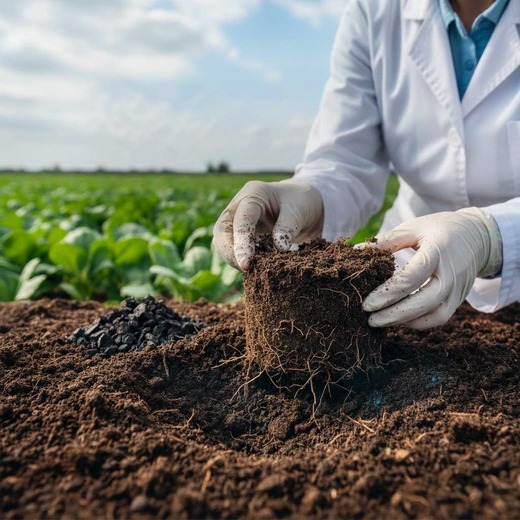
Two methods for transforming organic waste into high-value biofertilizers and also reducing disposal costs include composting and anaerobic digestion. Research conducted by MDPI demonstrates that agricultural wastes may be converted into high-quality organic fertilizers via the process of composting. Composting enhances the quality and structure of the soil, increases the moisture retention of the soil, and lessens the dependency on chemical fertilizers. An example of successful large-scale composting use in agriculture can be found on farms in The Netherlands.
Using solid-state fermentation, alternative biofertilizers can be produced from melon, pineapple, orange, banana, and papaya waste materials that would normally be disposed of in landfills via solid-state fermentation as evidenced by research conducted at PMC. Research has demonstrated that microorganisms, such as Azotobacter, Azospirillum, and Trichoderma, and mycorrhizal fungi associated with the waste generated from agricultural activities can also dramatically enhance soil by adding organically rich nutrient and carbon sources.
Vermicomposting residues (from worm bins), crop residues, and farmyard manure make up the world’s largest segment of organic fertilizer, and thus the process of transforming waste into nutrients and fertilizers is both commercially proven and is capable of large-scale implementation.
Deploy Biological Wastewater Treatment:
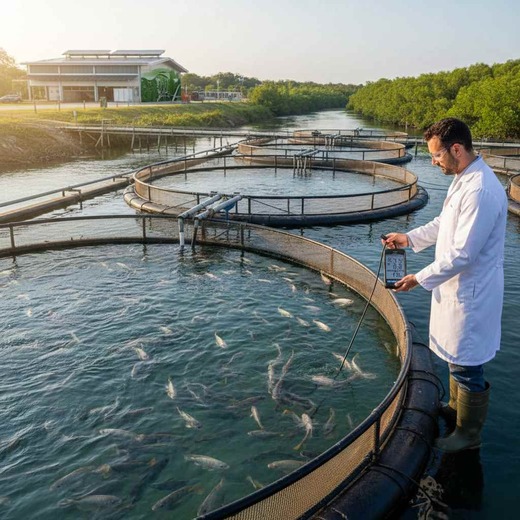
Many farmers pay for huge amounts of chemicals because wastewater produced by the farm is an expensive purchase, but researchers at the Environmental Systems Research Journal have illustrated that three viable biological options exist for the implementation of farm-level biological treatment plants would necessarily occur in a large-scale environment. One of these options is a constructed wetland. Plant species are grown in a dedicated area so that contaminants can be eliminated without the use of chemicals. Algae-based systems represent another biological treatment option, as they utilize photosynthesis to absorb nutrients and contaminants while also producing biomass that can be reused as animal feed or as a fertilizer. A final biological treatment option, and perhaps a much more revolutionary one, is a microbial fuel cell. When microorganisms decompose organic matter in the agricultural wastewater, it simultaneously generates electricity. This makes an otherwise costly wastewater treatment in a large-scale agricultural operation a process that produces energy; that energy would then be able to replace chemicals.
Convert Residues into Biochar and Biofuel:
The most valuable bio-based approach to crop residues is pyrolysis conversion. According to research by MDPI, agricultural waste pyrolysis can create biochar to enhance soil quality and sequester carbon, bio-oil for energy, and syngas for agricultural use. Research from BioResources verifies that lignocellulosic crop residues converted to sustainable aviation fuels can lower emissions by 60 to 90 percent, and companies such as Neste and Fulcrum BioEnergy have proven commercial feasibility, expecting to reduce 400,000 metric tons of CO2 emissions per year.
The reality check:
The issue is that a great deal of research conducted in the field of BioResources has proven that agricultural residue from the farm must be modified or altered to prepare it for using in bio-resources, and therefore, they will require minimal processing equipment, or facilities will need to be established to provide such processing services. However, access to capital to fund the initial costs for composting systems, biogas digesters, or constructed wetlands, for small-scale operations has been a barrier for this market.
In contrast, the trajectory of these markets will be demonstrated by the European Union (EU) through the EU Farm to Fork Strategy, which has reduced food waste by 10% in 2023 and has a target of 50% reduction by 2030 as a result of these established, bio-based circular processes.