In the agricultural economy of 2026, the access to global markets is no longer contingent on yield or quality alone. More and more, the capacity to export is contingent on the materials that are embedded throughout the production chain. As Europe and North America continue to strengthen their regulations regarding plastic pollution and carbon emissions, sustainability has transitioned from a value-add to a necessity. What was once an optional premium is now a critical component of maintaining export viability.
Packaging has become the new trade passport.
For farmers who target export markets, packaging has become the first hurdle that they need to pass in terms of compliance and credibility. Traditional plastic crates and the non-recyclable packaging materials are quickly becoming cost and reputation liabilities, especially with the implementation of the “Extended Producer Responsibility (EPR)” regulations.
Materials such as bagasse which is a byproduct of sugarcane fiber, and PLA (polylactic acid) are gradually being used as an alternative to the plastic packaging materials. According to a report by 2025 Global Trade Mag, the use of lightweight materials such as bagasse can lead to a reduction of up to 15% in transportation expenses, as well as a reduction of up to 59% in carbon emissions compared to plastic packaging.
By 2026, over a third of agricultural packaging globally is projected to have smart and active packaging capabilities. Blockchain-based QR codes and IoT-enabled moisture-control films are no longer nice-to-haves but necessities in order to meet the strict “field-to-fork” traceability requirements of high-end export markets.
Sustainable materials are not just limited to packaging:
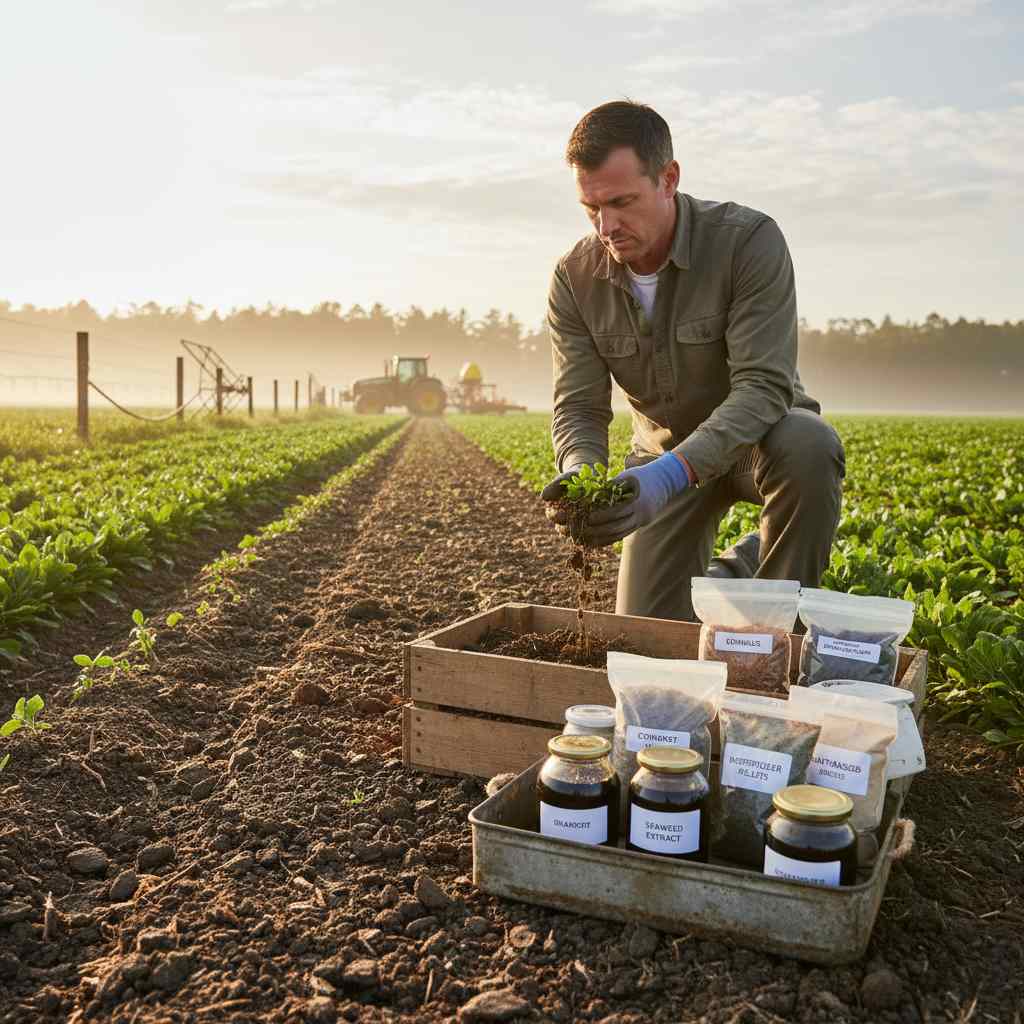
Conventional polyethylene mulch films are one of the biggest causes of what is commonly referred to as “white pollution,” resulting in microplastics in the soil, which can affect the eligibility of the farm for Residue-Free or Organic export certification.
According to recent research published by MDPI (2024), there is increasing use of nanocellulose mulch films and biocomposite mulch films that can degrade in the soil after harvesting. For exporters who grow high-value crops such as berries, herbs, and leafy vegetables, these mulch films are useful in preserving the soil and making it easier to comply with certification requirements.
The advancements that have been reported in agronomy literature also include the use of Polyhydroxyalkanoate (PHA) as a biodegradable coating for controlled release fertilizers. Unlike other polymer coatings, PHA does not leave any microplastic residue behind, which is in line with the revised Nitrates Directive of the European Union.
Market Scenario:
Using sustainable materials is no longer a branding activity, but a necessity to be able to participate in the premium export markets.
Global FMCG companies such as Unilever are increasingly assessing suppliers against structured Sustainable Agriculture criteria, in which packaging and material usage are given high importance. The suppliers who can prove the use of certified sustainable materials, have a better chance of getting selected as preferred suppliers.
Market data from SkyQuest Technology (2025) indicates that the sustainable agriculture industry is growing at a CAGR of 10.2%. Consumers in Europe and North America are willing to pay a premium of 15-20% for agricultural products packaged in plastic-free or fully compostable packaging.
Materials Over Labels:
For agricultural exporters, sustainability is no longer like an extra option but instead it is a prerequisite for market access. Every material decision, be it whether from the mulch on the farm to the packaging in the shipping container, is now a signal of compliance, credibility, and competitiveness.
Early movers in sustainable materials will find it easy to navigate regulatory requirements, build trust with customers, and gain consistent access to high-value global markets. In a trade environment where carbon credits and plastic bans are the norm, making informed material choices is no longer a choice but the key to fast value growth.that end product when dictated by feed data.