Introduction
Did you know that not just overfishing or climate changes are silently threatening the future of fish farming, it includes antibiotic resistance too.
The very antibiotics that our farmers rely on to keep their fish healthy are becoming useless because bacteria are evolving resistance to them at an alarming rate. Studies show that about 70–80% of antibiotics used in aquaculture aren’t even absorbed by fish and later they end up contaminating water, sediment, and ultimately reach to us. So yes, this isn’t just a fish problem anymore, it’s a human health crisis that is waiting to explode anytime.
And this is exactly why the shift toward low-antibiotic aquaculture isn’t optional anymore, it’s a must.
Why Water Quality Is the Foundation of Aquaculture
Most of the farmers only understand this when it’s too late, when the pond starts to smell, fish begin floating, and an entire season’s income disappears in a matter of hours. Water quality isn’t just a side topic, it’s the foundation of the entire operating system of an aquaculture business.
It’s a harsh truth most people don’t want to admit that bad water quality is quietly draining billions from the aquaculture sector every year. Farms aren’t collapsing because of feed formulas or stocking plans — instead they’re collapsing because the water is being ignored.
While farmers obsess over how much to feed or how many fish to stock, the real damage is happening underneath the surface, where poor water conditions slowly degrade the survival rates, growth, and profit until the numbers no longer make sense.
Billions Lost Due to Poor Water Management
Did you know that Egyptian tilapia farms lost approximately 100 million dollars in a single season due to water quality-related mortality events? And even in Brazil, disease outbreaks linked to suboptimal water conditions cost the aquaculture sector an estimated 84 million dollars annually.
Also, the lack of adequate dissolved oxygen is the leading cause of fish deaths worldwide. Not disease. Not parasites. Just bad water that farmers could have fixed if they’d been monitoring properly.
The pattern is clear:
- When dissolved oxygen drops below critical levels
- When ammonia accumulates unchecked
- When pH fluctuates
- When temperature shifts beyond tolerance ranges
Fish don’t just get stressed — they die in massive numbers, taking your investment with them.
Breaking Down the Critical Water Quality Parameters
1. Dissolved Oxygen: The Lifeline
When it comes to pond health, dissolved oxygen isn’t just another parameter — it’s the lifeline.
- Warm-water fish need around 5 ppm to stay stable
- Cold-water species require 6.5 ppm or more
When levels drop into the 3–4 ppm zone, the problems begin:
- Fish breathe harder
- Feeding slows
- Growth declines
- Infection risk increases
If they’re kept in that low-oxygen zone for long, feeding shuts down completely — ruining FCR and dragging the entire production cycle down.
2. Ammonia: The Invisible Killer
Ammonia plays a different game — it doesn’t announce itself until damage is already happening.
When pH rises above 8, ammonia converts into its dangerous un-ionized form. This form:
- Burns gills
- Reduces immunity
- Causes sudden unexplained deaths
And since 70–80% of ammonia comes from leftover feed and waste, every extra handful of feed tossed into the pond is basically an addition in toxicity, not growth.
3. pH: The Balance Keeper
Fish are incredibly sensitive to pH fluctuations.
Rapid changes — high or low — push them into stress.
- High pH makes ammonia more harmful
- Low pH releases toxic metals from pond soil
Either scenario destabilizes the entire ecosystem.
4. Temperature: The Master Variable
Temperature ties all of this together.
Because fish take on the temperature of their environment, even slight deviations can disrupt:
- Digestion
- Metabolism
- Oxygen demand
- Immune function
- Disease tolerance
Preventable Problems, Massive Gains
The tragic irony is that most water quality disasters are completely preventable. Farmers often lack technical knowledge — not tools.
Proper knowledge and investing in water quality management deliver massive returns:
Real-time monitoring sensors allow early intervention before issues escalate
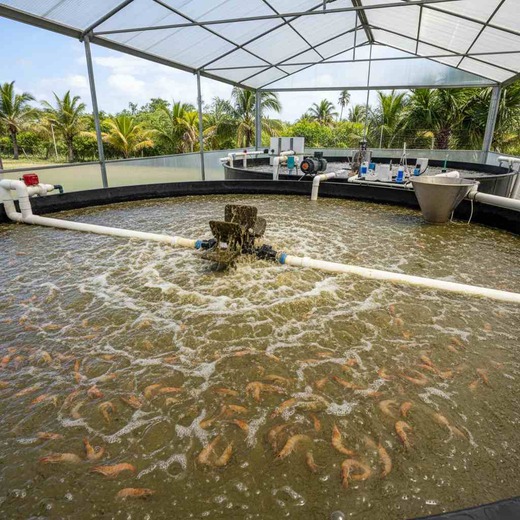
Aeration systems prevent oxygen crashes and reduce mortality
Biofilters remove ammonia and maintain healthier pond conditions
Why Water Quality Controls Profitability
Water controls everything — fish health, growth rates, feed efficiency, disease resistance, and survival — which collectively determine profitability.
Get it right and everything else becomes easier.
Get it wrong and nothing else matters because you won’t have any fish to sell.