Five years ago, a farmer was standing on his family-owned land that had been cracked and dried by the sun. The soil was once a rich dark type of earth that farmers would say was worth its weight in gold. Now it is more like a broken tile. When the rains came during the monsoon season, they would wash through the surface of the soil without soaking into the ground; all that was left was bare earth and a lot of debt.
This farmer had been employing practices of chemical farming according to the years of Green Revolution History including increased use of urea, and DAP, increased depth of tilling through larger, more powerful tractors. The soil has since become “used up,” creating a dependence on synthetic fertilisers, and depleting natural microbial activity. As the ground reached this realisation, he feared that unless he changed the way he grew his food, he wouldn’t have an earth to leave his children. This is a tale about his journey from using input-intensive methods of agriculture to “Prakritik Kheti (Natural Farming)” where he returned to his farming roots as the creator intended.
The plight faced by this farm exemplifies an overwhelming national crisis.
The Indian Council of Agricultural Research (ICAR) presents the facts that almost 30% of the total land area of India is presently suffering from degradation according to the research work of Queenslanders conducted since 2020. What this data additionally indicates is that the agricultural roots in states like Punjab and Haryana are suffering a sharp decline in their soil organic carbon (SOC), which is literally the energy used by plants for growth. The SOC in surface soils of Punjab and Haryana has declined to less than 0.5%, while a good SOC content in tropical soils needs to be at least 1%.
When the organic matter disappears, the soil is unable to deliver nutrients to the plant anymore. It becomes just a dead material that serves only to support the plant above ground thus requiring higher dosages of synthetic fertilizers per crop cycle to achieve the same level of production as would historically have been achieved through organic processes alone.
But What is Regenerative Agriculture?
Regenerative Agriculture is a concept that is very similar to Zero Budget Natural Farming (ZBNF) or Agroecology. It’s more than just not using chemicals. It’s also concerned with restoring the “Jeevamrut”, or “the nectar of life”.
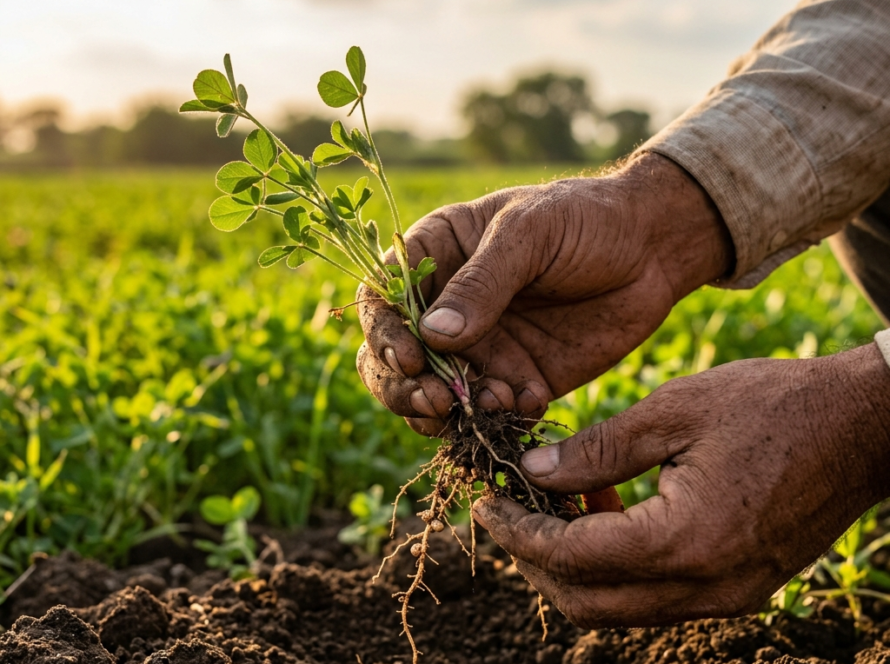
The philosophy behind this system is to work within nature’s cycles rather than trying to impose ourselves upon them through an industrial input model. For regenerative agriculture the focus is on the Rhizosphere or the thin layer of soil around the roots of plants where biological trading occurs at a high level, every second.
The World of Soil Microbes
In order to preserve their farm, the farmer needed to stop thinking like a chemist and start thinking like a biologist. Underneath the soil surface are a vast population of dormant bacteria, fungi and actinomycetes that are ready to come alive when conditions are just right.
- The Carbon Trades
Plants absorb carbon dioxide (CO2 gas) from the atmosphere and convert the CO2 into liquid carbon as sugars. The sugars are pumped into the soil through the roots to nourish the microbes.
Nature Geoscience published a 2021 article showing that microbial necromass (the remains of dead microbes) is a major contributor to stabilizing soil organic carbon. By feeding the microbes, the farmer was “growing” new soil.
- Mycorrhizae
Arbuscular Mycorrhizal Fungi (AMF) are an extension of plants’ root systems, especially in soils that have phosphorus fixed into them, like those in India. The fungi secrete enzymes to break down and dissolve minerals, which fertilizers would otherwise not be available to crops.
In 2022, studies supported that AMF (Arbuscular Mycorrhizal Fungi) networks significantly increase a crop’s ability to use water efficiently, which permits them to survive from one monsoon rain to another, with a longer period of dry weather in between.
- The Beneficial Microbes
The farm has a diverse microbiome that acts as a probiotic. Beneficial bacteria, like Pseudomonas and Bacillus, will colonize the roots of plants, creating both physical and chemical barriers to pathogens. These beneficial microbes reduce the need for costly, toxic pesticides.
The Restoration
Across rural India, farmers are adopting four “Pillars of Restoration” that are gaining in popularity:
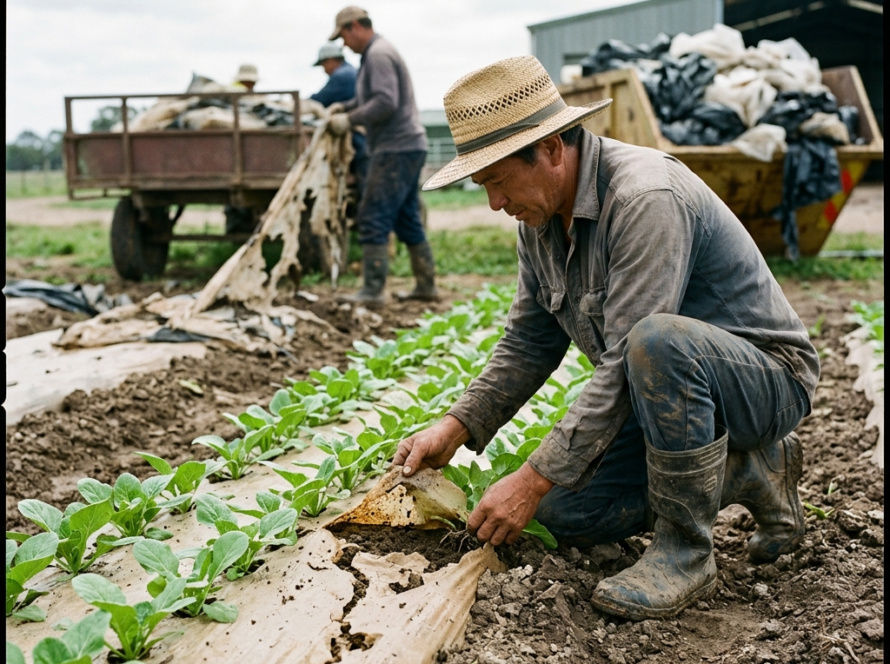
- Aachadana (Mulching): The farmer covered his soil with crop residue (instead of burning it which is a big contributor to seasonal air pollution). This kept the ground cooler and protected the microbes in his soil from the searing sun.
- Beejamrut (Seed Treatment): The farmer treated his seeds (before planting) with a microbial coating made from cow dung and urine. This inoculated his soil with beneficial flora from the very beginning.
- Intercropping and Diversity: Instead of planting just one type of crop (cotton), the farmer is also growing other crops, including pulses (like tur (pigeon pea)) and marigolds. Pulses naturally fix nitrogen; marigolds serve as “trap crops” for certain pests.
- Reduced Tillage: By minimizing how much he disturbed his soil, the farmer helped preserve fragile fungal networks that are usually destroyed by tilling.
Why the Industry is Going to Shift?
Regenerative agriculture is more than a simple “farmers’ movement”; it has become a necessity for many businesses within India’s large food & beverage industry.
- Supply Chain Risk Resilience
Due to the severe increase in temperature extremes and unpredictable monsoon season patterns, the Indian supply chain has become very vulnerable. Regenerative farm systems can provide buffering capacity against these extreme conditions, as higher organic matter content in soil also provides much greater water retainment and therefore helps in sustaining yields in times of drought.
- ESG/Sustainable Sourcing
Corporate pressure from both international and large Indian based businesses has been rising towards “clean label” products. These demands also align with the overall corporate ESG (Environmental, Social, and Governance) objectives of organizations as carbon sequestration practices of regenerative farming systems are significant reductions from initial carbon footprint of the finished product.
- Problems with Transition
There will be many risks associated with moving to these regenerative farming systems. In the beginning of the transition, in the first 3 to 5 years of the new system, there will be some “yield dip” to allow the soil biology to re-establish. Another large obstacle with the transition is the lack of knowledge on regenerative principles and preparation of bio-inputs will require significantly more manual labour to accomplish than current systems.
Frequently Asked Questions
- Q) What makes regenerative agriculture different from organic farming?
Regenerative agriculture concentrates more on soil improvement through active processes, compared to organic agriculture, which emphasizes on what not to do (such as using no chemicals).
- Q) How do microbes improve soil fertility?
Microbes work like biological factories by converting various nutrients. Some convert atmospheric nitrogen into soluble form, some mineralize phosphates from rocks, while others help convert dead plant matter into humus.
- Q) Is it economically viable for a small-scale farmer?
Yes. Even if production varies at first, the cost of inputs such as fertilizer and pesticides greatly decreases. Consequently, profitability increases, along with lower risks of agricultural indebtedness.
- Q) Can it really help with climate change?
Yes. The soil can be considered one of the biggest reservoirs of carbon on the planet. By keeping it underground and not oxidizing it while tilling, farming helps sequester carbon.
A New Beginning
Regenerative farming can be a viable source of restoration for farms. It can aid farms in their recovery process through the rehabilitation of their soils and through that, assist communities in their restoration to a healthy climate and healthy food supplies, as stated in the ancient Sanskrit saying, “Sasyam Sarvam”, or “There is only one source of all life and that is the soil itself.”