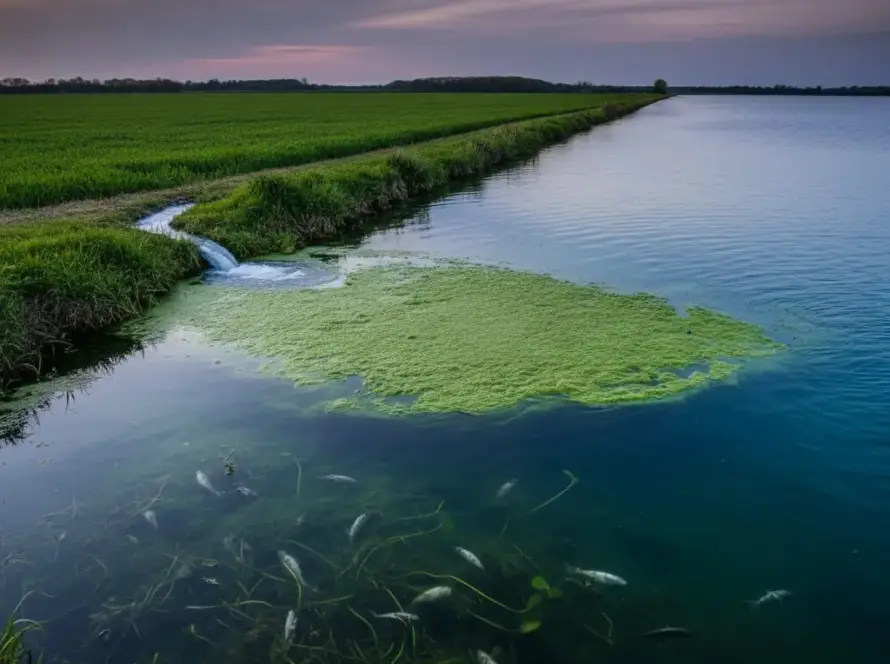
Traditional fertilizers send huge amounts of nutrients to the soil very quickly that plants are not able to use before those nutrients are lost to the air or washed away.
As per an article in Nature Food (2023), just 30% to 50% of the nitrogen added to the soil through fertilizers is absorbed by the plants. The leftover nitrogen is released into the atmosphere as nitrous oxide, which is known to be a greenhouse gas and is 273 times more potent than carbon dioxide in contributing to global warming over a hundred years, or the leftover nitrogen flows away into water bodies like lakes and oceans and causes dead zones, leading to billions of dollars worth of damage to the global fishing industry.
We have been aware of this situation for many years but until recently the technology to fix it was too expensive for most farmers. Now, this situation is changing rapidly.
How Does a Controlled Release Fertilizer (CRF) Actually Work?
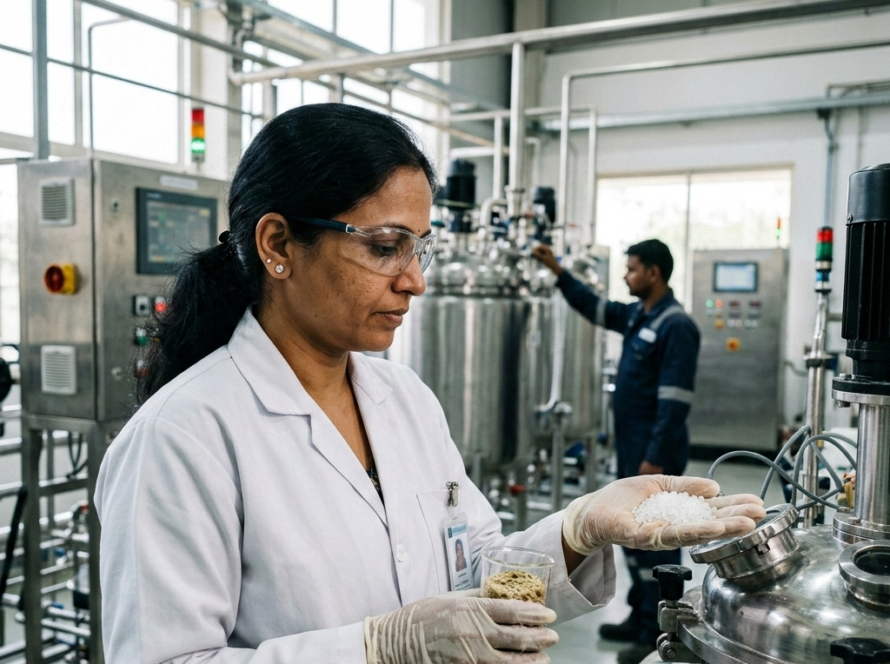
You can consider a CRF granule to be a tiny, smart time capsule that is buried in the soil. The CRF has some type of polymer or biopolymer shell that is wrapped around the nutrient core. The core contains either nitrogen, phosphorus, potassium or micronutrients. The shell regulates the diffusion of the nutrients from the core based on soil temperature and moisture. When the soil is warm and moist (this is when your crop is the hungriest and growing the fastest), the membrane becomes more porous and releases more nutrients. During the cold dormant periods, the membrane restricts the flow of nutrients from the core. Thus, the plant gets the nutrients it requires when it requires them the most.
A landmark 2024 meta-analysis published in the European Journal of Agronomy (87 field trials in 14 countries) found that the use of CRF treatments increased nitrogen use efficiency (NUE) by an average of 38% compared to traditional urea and that nitrous oxide emissions were reduced by 26% as well. Those numbers are staggering for a planet that is under extreme climate pressure.
Controlled release is not just a fertilizer technology, it’s a precision instrument that aligns nutrient supply with the biological clock of the plant.
~ Dr. Yibing Ma, Institute of Agricultural Resources, Chinese Academy of Sciences, 2024

The Biopolymer Breakthrough
Previously, Controlled Release Fertilizers (CRFs) were made from synthetic materials (e.g., polyurethane or polyolefins), which provide a controlled-release benefit but are harmful for soil health because these synthetic materials are non-biodegradable. Thus, if used on farms for many years, they’ll accumulate as microplastics within the ecosystem that we were trying to protect through the use of these products. The EU farmers and regulators along with increasing numbers of farmers and regulators from India are aggressively pushing back against this contradiction with their farming practices.
Here is where biopolymer-based coatings come into the discussion. One example of these coatings is polyhydroxyalkanoates (PHAs), which are naturally produced through microbial fermentation, and can produce release membranes that will completely degrade in soil without leaving behind any toxic residues.
A 2025 study conducted by Wageningen University demonstrated that applying PHA-coated slow-release urea produced NUEs comparable to those produced through the use of synthetically coated slow-release urea, while being totally non-toxic after 120-180 days when used under normal field conditions; thus, no microplastics generated, while supporting all the growth of crop production, which has been the holy grail the agriculture industry has been looking for.
Real Fields, Real Numbers
Based on a trial involving polymer-coated urea on 1,200 acres of sugarcane in Andhra Pradesh during the 2023-24 growing season, farmers have reported an overall 22% reduction in the total amount of fertilizer applied while achieving yields within 3% of the control group. FAO case studies show that after two successive growing seasons of applying coated-release fertilizers (CRFs) to paddy rice fields in Vietnam, the average amount of urea used was reduced by 31% and soil organic carbon levels were increased. These results did not come from laboratory testing; rather, they came from actual practicing farmers who experienced reduced input costs and improved soil health simultaneously.
As the overall economics continue to improve, there is also growing evidence indicating that CRFs are delivering a positive return on investment (ROI) after just one crop cycle for high-value horticulture crops and more than two to three crop cycles for staple crops. While CRFs have a higher price per pound of nitrogen than normal granular fertilizer, the overall savings achieved by using less fertilizer, spending less on labor associated with multiple applications and experiencing more consistent yields all contribute to a positive ROI.
What Precision Farming Demands?
To improve your crop production you need to know what your crop needs, when and how much to deliver, to ensure you are maximizing your yields. Controlled Release Fertilizers (CRFs) can deliver nutrients the way that precision ag has been waiting for. If you combine CRFs with soil-sensing technology and artificial intelligence, you can reduce waste and nutrient deficiencies to an absolute minimum.
The new frontier in this evolution are Smart CRFs that respond not only to environmental or soil factors (such as temperature and moisture), but to root exudates, which are the chemical signals that plants give off when they are in desperate need of nutrients. Research groups at the Nanjing Agricultural University recently published their initial research in 2025 on the development of bio-responsive CRF prototypes that will trigger the release of nutrients based on the exudates found in the area where roots are physically growing (the rhizosphere). If the results of this research can be developed at commercial levels, the way in which fertilizer and fertilizer efficiency is defined will change completely.
Frequently Asked Questions
Q) Are controlled release fertilizers safe for organic farming?
The answer depends on what material coats the CRF.
CRFs with conventional, artificial polymer coatings are not suitable for organic certification. Biopolymer-coated CRFs, especially those utilizing PHA or lignin-based coatings, are catching the eye of organic certification organizations worldwide. The EU’s Farm to Fork initiative has identified bio-based CRFs as a focus area, with several products being evaluated for organic certification at present. Organic farmers would be wise to check with their certification body about their eligibility for the moment.
Q) How long does a controlled release fertilizer last in the soil?
Release time will vary depending on the formulation and environmental factors, but typical commercially available CRFs are designed to provide a continuous supply of nutrients for three to six months. More expensive CRFs for high value crops, such as trees or perennials, may have a longer shelf life of eight to twelve months. Temperature is the key factor here; higher temperatures (over 25°C) speed up nutrient release, whereas lower temperatures significantly reduce it. In fact, this temperature-dependent behavior is a beneficial feature.
Q) Do controlled release fertilizers actually reduce greenhouse gas emissions?
Absolutely, and with considerable effect. First and foremost, it’s because of a reduction in nitrification; when there’s no extra nitrogen lying around in the soil that needs bacteria to convert it into nitrous oxide (N₂O), emissions will be much lower. According to the meta-analysis conducted in 2024 in the European Journal of Agronomy, the use of CRFs led to an average reduction of 26% in N₂O emissions. Some CRFs contain nitrification inhibitors such as DMPP, making the decrease even more pronounced.