“We’re a sustainable brand.” This is stated on each product shelf, on each About Us page, and in each investor presentation. Yet, there is always the one lingering question: what becomes of your packaging once it is unpacked?
Imagine two nearly identical brands with same price point, same minimalist design, same recycled-paper carrier bag at checkout. One uses conventional plastic packaging and the other uses compostable film made from biopolymers. Both call themselves sustainable but only one can actually prove it.
That gap between claiming and demonstrating sustainability is exactly where compostable packaging has become the most credible tool in a brand’s environmental arsenal.
The Credibility Gap in Green Marketing
There are more greenwashing cases than before. Trust among consumers is falling. Environmental claims without evidence are being increasingly scrutinized by regulators in the EU, UK, and India. Manufacturers who could previously make claims based on terms such as “eco-friendly” and “responsibly made” now have to provide evidence. This, of course, means tangible, verifiable, and life-end proof.
It’s no wonder, then, why packaging materials become a point of consideration from a sustainability perspective.
According to Mintel Survey, 2024, over two-thirds (67%) of consumers worldwide believe that packaging acts as the most prominent indicator of brand eco-consciousness compared to carbon credits, codes of conduct, and ESG reports.
What Compostable Packaging Proves
Unlike recycling, which relies on consumer accuracy when sorting, transportation systems, and markets to buy the waste materials, composting is a tangible and visible process that includes a closed-loop system. You put the package into the system, microorganisms digest it, and you end up with soil or compost.
Compostable packaging certified to standards like EN 13432 (Europe), ASTM D6400 (USA), or IS 17088 (India) must biodegrade within 90–180 days under industrial composting conditions. Some newer formats, made from materials like PHA (polyhydroxyalkanoates), biodegrade in soil and marine environments too.
Walk Through the Brand’s Sustainability Journey
- Product development: sustainability by design
A brand that selects compostable material right from the start of the design process will have incorporated sustainability in the very fiber of the product. The choice of material at this stage will define the basis upon which any claim is made in the future.
- On-shelf storytelling: certification as credibility
Having such a mark as OK Compost of TUV Austria or the Biodegradable Products Institute (BPI) on the product packaging indicates that the claim is certified and therefore credible; a certification mark removes the element of self-declaration.
- Post-purchase: the proof lives on
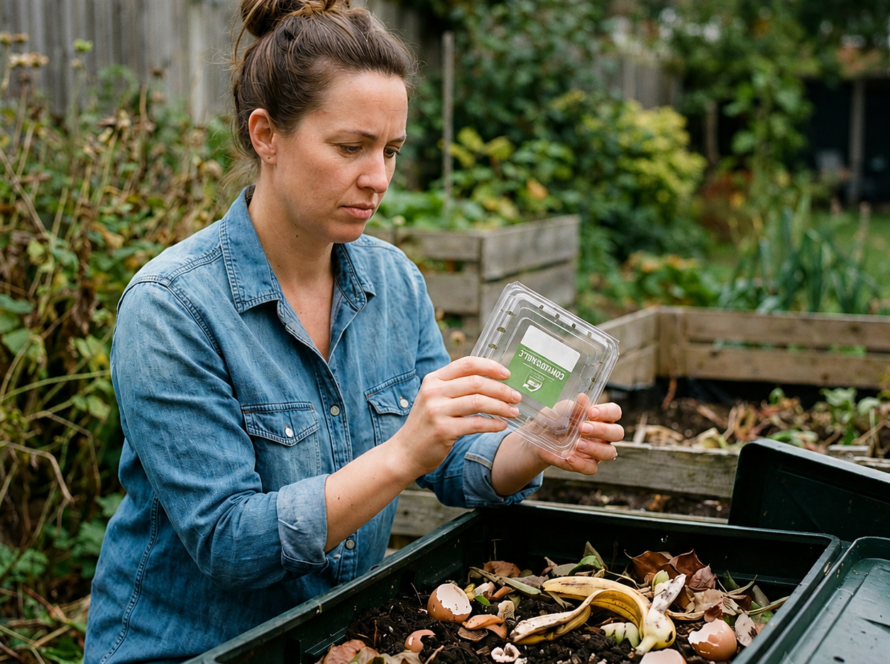
A customer who uses his own composting process to dispose of packaging and witness how the packaging is transformed into something useful within weeks after dropping the packaging into the garden bin makes for an ongoing brand experience even outside the doorsteps. This ensures advocacy by customers for such brands.
- ESG reporting: quantifiable Scope 3 reductions
Use of certified compostable packaging offers organizations an actionable metric in calculating their Scope 3 emissions. The life cycle assessment figures provided by biopolymer packaging companies can be directly referenced in annual reporting, thus enabling organizations to comply with rising investor demands for quantitative actions against climate change.
PHA: The Material Changing The Conversation
Compostable materials are not all created equal. Earlier versions, such as PLA films, needed industrial conditions for composting and even then were confusing to consumers for their proper disposal. PHAs are just one example of how new generation polymer packaging is addressing many of these problems.
PHA is produced by microorganisms that naturally synthesise polyester as an energy reserve. It biodegrades in soil, freshwater, and marine environments without leaving microplastic residue. For brands selling into environmentally conscious markets or into regulated markets increasingly banning single-use plastics, PHA-based packaging offers both the performance of conventional plastic and the end-of-life story conventional plastic can never tell.
Where TerraPHA Comes In
TerraPHA Biotech is India’s first commercial biopolymer company, producing non-GMO PHA using naturally occurring microbial systems and a wide range of renewable carbon feedstocks. For brands building genuine sustainability credentials, TerraPHA’s materials offer something rare: a packaging input whose entire lifecycle, from fermentation to end-of-life is clean, traceable, and scientifically sound.
TerraPHA’s eco-friendly, low-impact manufacturing process ensures brands aren’t just shifting the environmental burden upstream. The use of diverse renewable feedstocks supports circular economy integration, making it possible to link packaging choices to regenerative supply chain stories that resonate with both consumers and investors.
Brands collaborating with TerraPHA gain access to precision biopolymer formulations that meet international compostability standards giving sustainability teams the verified, citation-ready data they need for credible ESG disclosures and marketing claims.
Frequently asked questions
Is compostable packaging actually better for the environment than recycled plastic?
In most cases, this is true, especially compared to plastic, which does not have a high rate of collection for recycling. Packaging that is certified compostable using biopolymers such as PHA gives a sure route at the end of its life. This is because the package decomposes into water, carbon dioxide, and biomass, without leaving any harmful substances, irrespective of whether it is sorted or not.
Can compostable packaging claims withstand regulatory scrutiny?
Yes, if they have been certified by well-known third-party agencies. Certification systems such as EN 13432 in Europe, ASTM D6400 in the US, and IS 17088 in India provide strict standards on the rate of biodegradation, disintegration, and ecotoxicology. The use of these certified materials would allow companies to make specific claims rather than eco-friendly statements.
What is PHA and why is it considered superior to PLA for packaging?
PHA stands for polyhydroxyalkanoates and is a family of bio-polymers that occur naturally in living organisms. Unlike PLA, PHAs can biodegrade in domestic composting systems, soils, fresh water, and marine environments, whereas PLA needs to be processed under specific industrial composting at temperatures above 60°C. This increased range of possibilities makes the material more suitable for commercial use in packages.