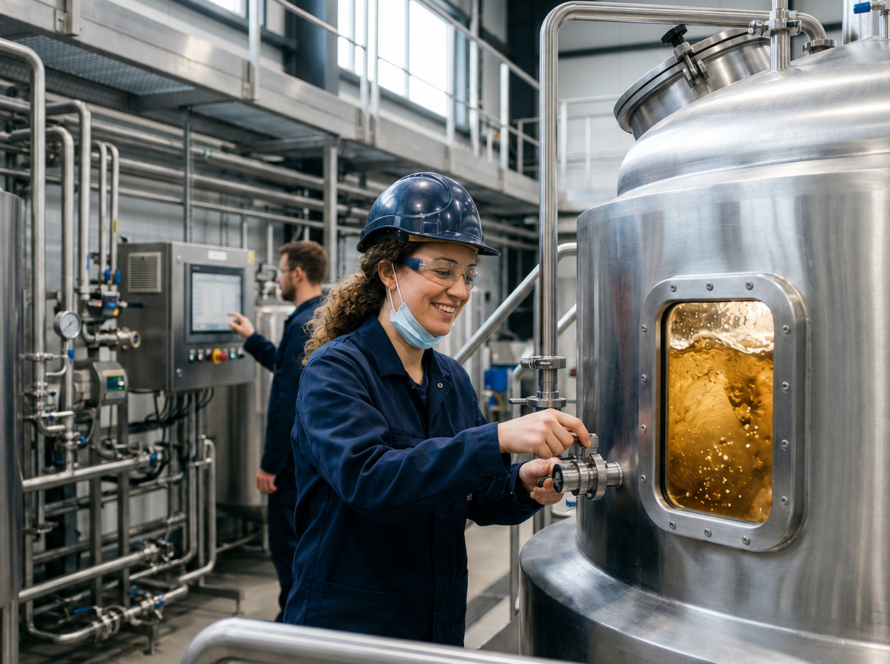
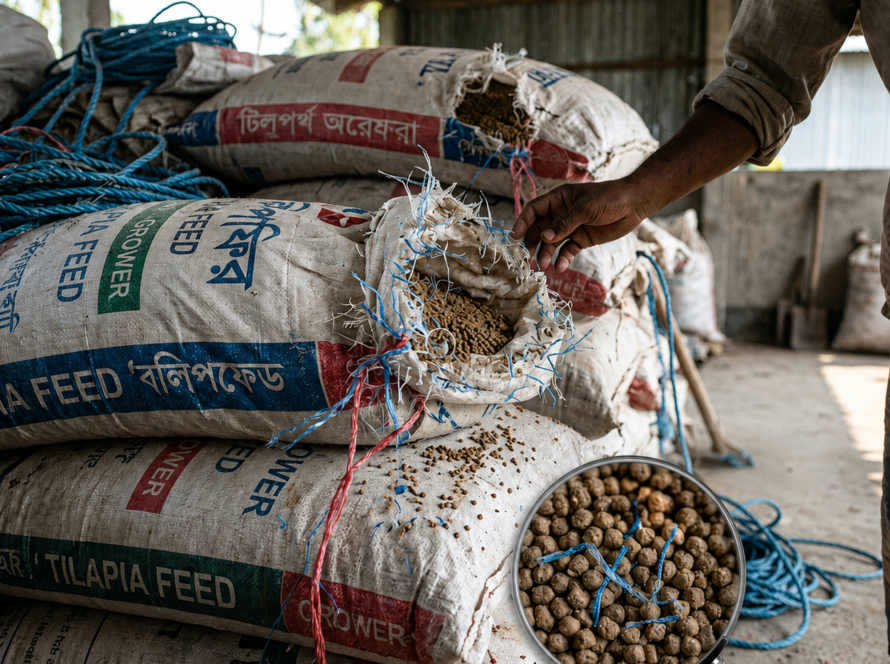
Not all PHA created is equal.
Two bags of PHA pellets can look identical, may even come from the same bacteria, and still cost differently and behave differently. One might go into a mulch film. The other might go inside a patient.
This is because PHA isn’t just one polymer. Different PHA compositions can result in different material properties, giving it the potential for multiple applications.
What is PHA and Why Is It So Versatile?
Polyhydroxyalkanoates are polyesters that bacteria make inside their own cells and store as an energy reserve, similar to the way humans store fat. Feed the right microbe the right carbon source and it fills with polymer granules that can be harvested and processed on ordinary plastics equipment.
PHAs are exceptionally versatile because of their molecular structure, mechanical properties, and degradation profiles can be tuned across a wide spectrum.
Versatility comes from family size as well. More than 150 monomer building blocks have been identified, which is why PHA spans stiff thermoplastics through rubbery grades, and why it breaks down in water, seawater, soil, home and industrial composting (Koller et al., 2025).
That range is the reason one material can serve a compost bag and a surgical suture. It is also the reason the two cannot share a specification.
Industrial-Grade PHA
Industrial grade goes into packaging films and trays, agricultural mulch films, consumer goods and coatings.
What matters here is mostly cost, processability, mechanical performance, shelf life, and making tonnes rather than kilograms. PHAs bring excellent oxygen barrier performance to that list, which suits fatty foods and oxygen-sensitive products (Javed et al., 2026), and they break down across soil, compost and water rather than needing one specific facility.
On price, PHBV production has been estimated at €2.82 to USD 6.29 per kilogram against conventional resin at or below €1.00 (Atares et al. 2024). The lever is known that feedstock is over 40% of operating cost, so waste-derived carbon moves the number directly.
Formulation follows. Industrial grades are routinely blended and compounded, carrying plasticizers, nucleating agents, fillers and processing aids chosen to widen the processing window or hit a cost target.
None of that is a shortcut. An additive that helps a mulch film survive a season is doing its job. The purity question is simply different: the film must be safe for soil and crops, not for blood and tissue.
Medical-Grade PHA
Medical grade means every property is specified, measured and documented, not just achieved.
Purity is the center part. PHA comes from bacteria, and gram-negative bacteria carry endotoxins in their outer membrane. Limits sit at 20 endotoxin units per medical device, and 2.15 EU for devices contacting cerebrospinal fluid (Utsunomia et al., 2020). Those limits are reachable, and purification routes decide it. NaOH digestion has yielded polymer under 1 EU per gram, charcoal-assisted extraction under 2 EU per gram, comfortably inside the requirement.
Composition and molecular characteristics must be controlled and reproducible. Medical P4HB requires molecular weight above 10⁶ g per mol, which chemical synthesis cannot reach at all. Only fermentation can, and recombinant strains have produced 50 per litre in under 48 hours (Utsunomia et al., 2020). Residual solvent control matters too, since conventional extraction uses chloroform, methylene chloride, or tetrahydrofuran.
Degradation must be predictable, sterilization validated rather than assumed, and batch consistency becomes a release criterion rather than a preference, which is why medical producers run tighter quality control than industrial lines need (Mosca Balma et al., 2026).
None of this is theoretical. The FDA cleared a monofilament P4HB suture in 2007, and surgical meshes followed (Williams et al., 2013).
Industrial-Grade vs Medical-Grade PHA
| Parameter | Industrial-grade PHA | Medical-grade PHA |
| Primary objective | Cost and performance | Safety and clinical performance |
| Purity | Application-dependent | Highly controlled |
| Manufacturing | High-volume | Strictly controlled |
| Batch consistency | Important | Critical |
| Molecular properties | Performance-focused | Precisely characterised |
| Additives | May be used | Carefully controlled |
| Degradation | Application-specific | Predictable and biologically appropriate |
| Sterilization | Usually not a major requirement | Must be validated |
| Biocompatibility | Not necessarily required | Essential |
| Traceability | Standard industrial controls | Extensive traceability |
Sources: Utsunomia et al. (2020); Mosca Balma et al. (2026).
Why Degradation Behavior Matters in Medical Applications
In a compost bin, degrading a few weeks faster or slower costs nothing. In a body, degradation rate is crucial. A resorbable implant holds strength while tissue heals, then disappears on schedule. Phasix mesh and the P4HB plug fully resorb within 12 to 18 months 9Utsunomia et al., 2020).
How it degrades matters as much as how fast, and here PHA has real advantage. PLA breaks down by bulk hydrolysis and acidifies the tissue around it. PHAs are degraded by enzymes or by surface erosion, wearing away from the outside instead of turning acidic from within (Utsunomia et al., 2020). The breakdown product helps as well. 4-hydroxybutyrate is a normal compound in the human body proven biocompatible. Few implant materials can say the same.
Biocompatibility, Sterilization and Safety
Biocompatibility is tested, not claimed, and the ISO 10993 series sets out the how by cytotoxicity, irritation, sensitization, implantation response and degradation products.
Sterilization is matched to the device rather than applied by habit. Ethylene oxide and gamma irradiation can sterilize and depyrogenate in one step, and charcoal filtration or oxidative treatment cuts endotoxin while preserving the polymer (Mosca Balma et al., 2026). Gamma can cause chain scission that shifts molecular weight, fine for a suture and worth avoiding for a bone scaffold, so the route is chosen per product and validated.
Heat behaves differently here. P4HB melts at 60°C, against 175°C for PLA and 225°C for PGA (Utsunomia et al., 2020). That rules out steam autoclaving, and it means the polymer is shaped at gentle temperatures that leave sensitive additives and drug payloads intact.
How TerraPHA Helps
TerraPHA Biotech is World’s first non-GMO biopolymer company, producing PHA and PHA-based products using naturally occurring non-GMO microbial system. It uses precision fermentation processes to make sure the material is produced consistently and can be made on a larger scale.
The company works from diverse renewable feedstocks including waste streams, converting organic and industrial wastes into higher-value material. This flexibility makes the production process more adaptable.
Biomedical industry is amongst the company’s future application sector, aiming at biodegradable biopolymers as a safer, more compatible options for medical devices and drug delivery.
Endnote
Grade is a promise about evidence. Industrial PHA performs at workable price and tonnage, breaks down in soil and water, and barriers oxygen better than most bioplastics. Medical PHA adds an endotoxin load, molecular weight, residual profile, degradation timeline, and sterilization route that are measured, recorded and repeatable.
Both rest on the same biology. PHA has already cleared the hardest test a polymer faces, approval for use inside the human body, and it did so in 2007. Choosing between grades is a question of which proof you need, which is a far better position than arguing about whether the material works.
Frequently Asked Questions
Can I use industrial-grade PHA for medical devices?
No, because the limits that define medical grade, such as 20 endotoxin units per device (Utsunomia et al., 2020), are not measured or documented for industrial material, and an undocumented batch cannot be released.
Why is medical-grade PHA more expensive?
The polymer is a small part of it. Purification to clear endotoxin limits, molecular weight above 10⁶ g per mol, solvent residue control, validated sterilization and batch traceability are all documented work, and that documentation is most of the price.
Is PHA automatically safe because it is biodegradable?
Biodegradable describes end of life; safety comes from ISO 10993 testing of the finished device and its degradation products. PHA starts well placed, since 4-hydroxybutyrate is already a normal compound in the body.
Can medical-grade PHA be steam sterilized?
Not P4HB. It melts at 60°C (Utsunomia et al., 2020), so ethylene oxide or irradiation is used instead, and both can sterilize and depyrogenate in one step.
Reference
Atarés, L., Chiralt, A., González-Martínez, C., & Vargas, M. (2024). Production of polyhydroxyalkanoates for biodegradable food packaging applications using Haloferax mediterranei and agrifood wastes. Foods, 13(6), 950. https://doi.org/10.3390/foods13060950
International Organization for Standardization. (2025). ISO 10993-1:2025 Biological evaluation of medical devices — Part 1: Evaluation and testing within a risk management process. https://www.iso.org/standard/68936.html
Javed, A., Mehmood, W., Bhatnagar, A., & Dessbesell, L. (2026). Bio-based plastics in food packaging: Performance, environmental impact, end-of-life, technology readiness level and market trends. Applied Food Research, 6, 102219. https://doi.org/10.1016/j.afres.2026.102219
Koller, M., Heeney, D., & Mukherjee, A. (2025). Biodegradability of polyhydroxyalkanoate (PHA) biopolyesters in nature: A review. Biodegradation, 36(4), 76. https://doi.org/10.1007/s10532-025-10164-y
Mosca Balma, A., Meinardi, S., Roato, I., & Mussano, F. (2026). Polyhydroxyalkanoates in bone alloplastic materials: State of the art and future perspectives. Polymers, 18(12), 1508. https://doi.org/10.3390/polym18121508
Utsunomia, C., Ren, Q., & Zinn, M. (2020). Poly(4-hydroxybutyrate): Current state and perspectives. Frontiers in Bioengineering and Biotechnology, 8, 257. https://doi.org/10.3389/fbioe.2020.00257
Williams, S. F., Rizk, S., & Martin, D. P. (2013). Poly-4-hydroxybutyrate (P4HB): A new generation of resorbable medical devices for tissue repair and regeneration. Biomedizinische Technik/Biomedical Engineering, 58(5). https://doi.org/10.1515/bmt-2013-0009