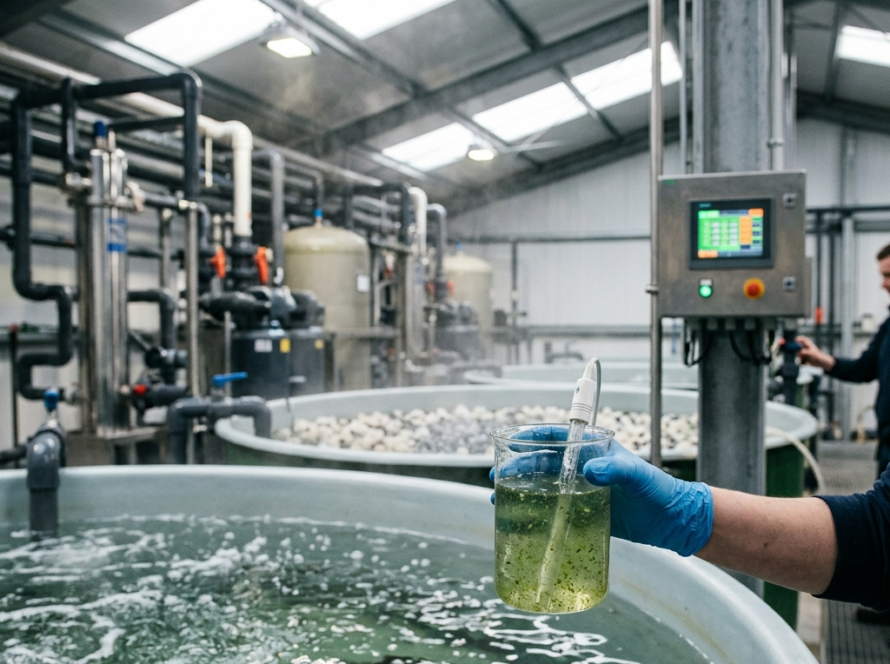
The term “Precision farming” sounds clinical, but its concept is elegant. Traditional fermentation like brewing, cheese-making, etc uses microbes for broadly useful transformations. Precision fermentation goes further in this as it gives microorganisms a specific genetic instruction, for instance to produce this enzyme, this biopolymer, this growth factor and then scales that production in industrial bioreactors.
Agricultural uses of precision fermentation unlock a new category of inputs that conventional chemicals cannot provide access to. These include specifically targeted bioactive compounds, microbial microorganisms as inoculants, enzyme-based soil conditioning materials, and biodegradable polymers to deliver nutrients to plants when they are needed most.
A 2024 Nature Food Review included inputs from precision fermentation will allow for reductions of crop production’s nitrogen footprint by as much as 35% compared to traditional farming methods while maintaining/increasing production yields. This has significant implications for both cost issues and regulatory requirements.
The $36 billion figure warrants scrutiny. It is backed by real use of crop nutrient fertilizers, biopesticides and soil biological agents, all of which are in use today. According to a 2025 study by Good Food Institute and other partners, agricultural ingredients produced via fermentation currently bring a compound annual growth rate (CAGR) of 22.4%, nearly double than the growth rate of the overall agri-biotech industry.
Three Applications Changing Farm Inputs
The impact of precise fermentation on agricultural inputs is not uniform, but is concentrated in three areas in which traditional chemistry has struggled regarding one or more of efficacy, cost and environmental profile for a long time.
The first is biological nitrogen fixation.
Synthetic nitrogen fertilizer represents ~1-2% of global energy usage and the method of using precision fermentation to facilitate the mass-production of nitrogen-fixing microbial strains delivers ways of using these nitrogen-fixing microbes to reduce dependence on synthetic nitrogen without compromising yield when used as seed coating or soil application. Field studies in India, Brazil and the USA found significant reductions in nitrogen input, between 18% and 28% with outputs remaining comparable.
The second is enzyme-based soil conditioners.
They use fermentation-derived enzymes (i.e., phytase, cellulase, and phosphatase) to convert “locked-up” nutrients within soils into usable forms by converting such nutrients into an accessible form for plants. These enzymes have existed in nature for aeons, but through the development of the ability to produce these enzymes through precision fermentation at commercial scale and in targeted concentrations at an economically viable cost (for agronomists), we can now apply them to soil to improve plant health and yield.
The third is biopolymer.
Biopolymer carriers for controlled-release of both nutrients and biostimulants are potentially the most significant type of microbially based soil conditioners. This is where the science of fermentation as material science converges with field efficiency in the most direct manner.
While the crossover narrative is still developing, it has a very clear direction. Surveyed markets found that commercial farms adopted precision fermentation at a rate three times greater between 2022 and 2025 because of ROI on soil health metrics and crop residue compliance. We are past the initial adoption phase to now be called the ‘early majority.’
Polyhydroxyalkanoates (PHAs) are one of the least researched but potentially most important areas of agriculture as it relates to Precision Fermentation. PHAs are biodegradable, naturally occurring polymers created by certain types of bacteria which store energy in the form of an all-living storage system. Precision fermentation allows the production of PHAs to be controlled, expanded, and adjusted for specific properties.
In agricultural inputs, matrices made of PHA can be used as intelligent delivery systems to release nutrients, bioactive substances, or microorganisms based on specific soil conditions such as temperature, moisture, and pH. This creates precision nutrition systems versus traditional slow-release systems; which are costly and imprecise in the way they deliver nutrients. In addition, because PHAs are biodegradable, no microplastic remains after PHAs have been used to deliver their payload. Thus, not only do PHA carriers enjoy regulatory advantages over products with microplastic residues, but they also have the potential to have a large commercial advantage in the future as well.
How TerraPHA is building this from the ground up in India
TerraPHA is India’s first biopolymer company, and its entire production architecture is built on precision fermentation. Using non-GMO microbial systems and optimised bioconversion conditions, TerraPHA produces PHA polymers from a wide range of renewable carbon sources, a flexibility that gives the company both supply resilience and a genuinely circular production model.
In agriculture, TerraPHA’s PHA-based formulations serve as the intelligent carrier layer that the precision fermentation revolution has been missing at scale in India. Soil conditioners, controlled-release nutrient matrices, and bio-based input delivery systems; all derived from clean fermentation, all fully biodegradable, all designed for the agronomic realities of South Asian and tropical farming systems.
What sets TerraPHA apart isn’t just the technology, it’s the integration. Precision fermentation, optimised conditions, eco-friendly processing, and zero antibiotic residue. The entire stack is designed to deliver the benefits of next-generation agricultural inputs without the regulatory, environmental, or supply chain risks that plague imported bio-input solutions.
What This Means for the Next Decade of Indian Agriculture
India’s agricultural sector faces a combination of pressures from low soil health caused by decades of being treated with chemicals, restrictions on export residues, erratic weather patterns and farmers who are looking for cost-effective and effective inputs for their farms. Precision fermentation provides a solution to all four of these areas at the same time, but this is not a technology story; it is an agronomic story.
When a farmer first uses a precision-fermented biopolymer carrier as a carrier for their soil conditioner, they do not know what it is. However, they will know what it does. For example stabilising input costs, improving moisture retention in the soil, passing export batch-clean residue tests and for those that have been using precision fermentation for two years increasing their overall yield.
Frequently asked questions
Q: Is precision fermentation same as genetic modification (GMO)?
No, and this is what sets them apart. Precision fermentation is when microorganisms are used in the manufacturing of certain substances. Precision fermentation may involve genetically modified organisms, but not necessarily, as companies such as TerraPHA refrain from using any genetically modified strains of microbes whatsoever. End products of this process are never considered GMOs no matter the source, because the microorganism is a separate entity from its product.
Q: How does precision fermentation compare to synthetic chemistry in terms of scalability?
It is here that the technology was always suspect and where infrastructure investments have altered the debate. Chemical plants grow via capital spending on infrastructure. Fermentation scales by capacity in the bioreactors themselves, a more modular and quicker way to go about it. A 2024 study conducted by McKinsey regarding bio-manufacturing has noted that precision fermentation factories are able to achieve parity in terms of capital expenditure with synthetic alternatives by being about 60-70% less capital intensive, while also having shorter development times. In agricultural production, the ability to customize products makes this more important.
Q: What are PHAs and why do they matter for agricultural delivery systems?
PHA (Polyhydroxyalkanoates) refers to a group of biodegradable polyesters that occur naturally in bacteria as storage compounds for energy. In agriculture, PHAs serve as intelligent carriers because they release their cargo, which may be nutrients or other active substances, when stimulated by specific conditions of soil such as heat and humidity. Unlike other coating agents, which produce synthetic microplastics as residues, PHAs break down entirely into carbon dioxide and water.