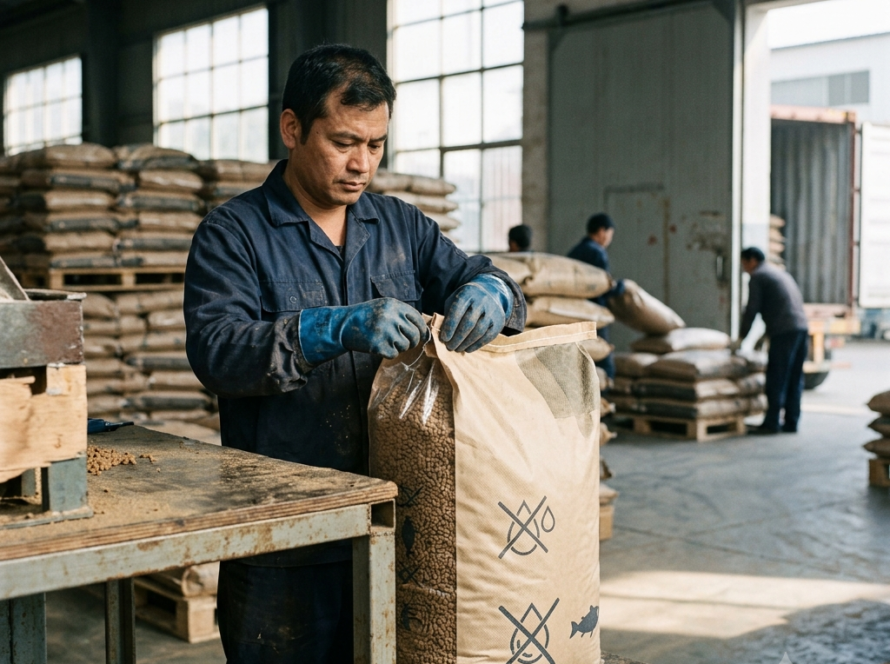
A packaging sample may look perfect in terms of appearance, texture, and cost, but the most critical factor is often overlooked and that is the material’s barrier properties against oxygen and moisture. These properties determine whether a food product remains fresh and safe throughout its shelf life. The supporting laboratory data is usually available but often requires a specific request from the supplier.
Two Important Packaging Values
The shelf life of packaged food mainly depends on stopping two things from entering the package:
- Oxygen
- Water vapour (moisture)
To measure how well a packaging material protects food, we look at two important values:
- OTR (Oxygen Transmission Rate):
- It tells us how much oxygen can pass through the packaging film over time.
- A low OTR means less oxygen enters; A low number keeps fats from going rancid and colours from fading.
Example: Coffee, nuts, and oily snacks need very low OTR because oxygen damages them quickly.
- WVTR (Water Vapour Transmission Rate)
- It tells us how much moisture can pass through the packaging film.
- A low WVTR means better moisture protection; A low number stops biscuits going soft and powders going lumpy.
Example: Crisps mainly fail because they absorb moisture, so WVTR is very important.
Which value matters depends on the food:
- Crisps, biscuits, snacks = WVTR is most important because moisture makes them soft.
- Coffee, nuts, fatty foods = OTR is most important because oxygen causes rancidity.
A packaging supplier must provide both OTR and WVTR values for the exact film being used. Without these numbers, it is impossible to accurately predict how long a product will last.
Why The Numbers Stay
Sometimes packaging companies do not share OTR and WVTR values for a few reasons. It could be poor communication as the salesperson may not have the test report ready or the customer may not have asked for it or it could simply be an overlooked document.
But sometimes, the missing data may be intentional because packaging performance can vary depending on the type and grade of film, its thickness, and the manufacturing process. A film that shows excellent barrier properties under ideal laboratory conditions may perform differently in the actual production environment. This variation is particularly common with newer packaging materials, where different versions of the same material can have significantly different oxygen and moisture barrier performance.
If a supplier cannot provide actual barrier test data (OTR and WVTR) for the exact film you are buying, you should be careful. A missing performance value does not necessarily mean that the packaging film is unsuitable, but it indicates that its effectiveness has not been verified. Without supporting data, shelf-life predictions become uncertain, and decisions should not be based solely on supplier claims or marketing information. OTR and WVTR data are the proof that packaging can actually protect the food.
The Bioplastic Myth
There is a belief that anything biodegradable must be a weak barrier. It is worth correcting, because it is wrong in both directions.
Some bioplastics genuinely are leaky. Plain PLA has fairly high oxygen and water permeability, which is why it is often coated or blended before it goes near sensitive food (Nature, 2025). That is the grain of truth the myth grew from.
But it does not hold across the board. One PHA, called PHBHHx, was measured with oxygen permeability roughly 6 to 25 times lower than polypropylene, polyethylene and polystyrene. It came close to PET, one of the most common packaging plastics there is (Vandewijngaarden et al., 2014). That is a biodegradable material beating the everyday plastics on the very property people assume it must fail. The category is not the answer. The specific grade, with its data, is.
Four Things to Check
You do not need to be a packaging expert or own a laboratory to check whether a supplier’s packaging claims are reliable. You just need to ask a few direct questions.
Ask these four questions:
- “What is the OTR of this exact film at this thickness?”
(This tells you how much oxygen can pass through the actual packaging material you will buy. The thickness matters because a thinner and thicker film of the same material may perform differently).
- “What is the WVTR under the temperature and humidity conditions my product will face?”
(Moisture movement changes depending on the environment. A film that works well in a dry, cool lab may perform differently in a hot and humid storage area).
- “Which test standard was used to measure these values?”
(This tells you whether the testing was done using a recognized method. It helps you compare results fairly between suppliers).
- “Can I see the actual test report, not just a summary?”
(A full report provides proof of the results. A marketing sheet may only show the best numbers without details).
How TerraPHA Helps
TerraPHA Biotech is World’s first commercial non-GMO biopolymer company. The key ingredient is PHA, made by naturally occurring, non-GMO microbes and genuinely biodegradable in soil and water. The barrier point is where it gets practical. PHA is one of the biopolymers that can offer a real oxygen and moisture barrier rather than a weak one. So, it does not have to be treated as an automatic downgrade from conventional plastic.
Just as important is the willingness to talk in numbers. The most useful thing a packaging partner can do is not promise you freshness in a brochure. It is to put the OTR, the WVTR, the thickness and the test method in front of you. Then let your own product tell you whether the film is right. A claim you can check beats an adjective you can’t, every time.
Frequently Asked Questions
What do OTR and WVTR actually mean?
OTR is how much oxygen passes through the packaging in a day; keeping it low protects fats and colour. WVTR is how much water vapour passes through; keeping it low stops moisture spoiling dry foods. Together they are the main things deciding how long a packaged product stays good.
Are biodegradable materials always a worse barrier?
No. Plain PLA is fairly permeable and often needs help (Nature, 2025), but that is not the whole family. One PHA showed oxygen permeability well below common plastics like PP and PE and close to PET (Vandewijngaarden et al., 2014). Barrier performance depends on the specific grade, not on whether a material is biodegradable.
Why won’t some suppliers share barrier numbers?
Occasionally they simply don’t have the report at hand. Other times the numbers are less flattering than the pitch, or vary by grade and thickness in ways that are awkward to summarise. Either way, if a specific figure cannot be produced for the exact film you are buying, treat the shelf-life promise as unproven.
What is the single most useful thing to ask for?
The test report for the exact film and thickness you would receive, showing OTR and WVTR and the standard used to measure them. A summary line is easy to dress up. A test report at your real storage conditions is much harder to fake, and tells you what you actually need to know.
References
Nature (npj Science of Food). (2025). Improving the oxygen and water vapour barrier properties of PLA via a novel interface engineering. npj Science of Food, 9, Article 89. https://doi.org/10.1038/s41538-025-00450-7
Vandewijngaarden, J., Murariu, M., Dubois, P., Carleer, R., Yperman, J., Adriaensens, P., Schreurs, S., Lepot, N., Peeters, R., & Buntinx, M. (2014). Gas permeability properties of poly(3-hydroxybutyrate-co-3-hydroxyhexanoate). Journal of Polymers and the Environment, 22(4), 501–507. https://doi.org/10.1007/s10924-014-0688-1