Walk through any farm in India, the Philippines, or the American Midwest, and you’ll find the same catastrophe everywhere which is an environment polluted with the plastics. From the remains of mulch films in the soil to abandoned irrigation tubes, the agricultural sector produces nearly 12.5 million tonnes of plastic waste annually.
According to a 2021 FAO report, less than 10% of it gets properly recovered. The rest fragments, sinks into soil, washes into rivers, and quietly disrupts the microbial ecosystems that took centuries to build.
But a new solution seems to emerge from the soil science laboratories and biotechnology incubators of 2025.
And that is PHA (polyhydroxyalkanoates).
The Molecule That Degrades Eventually
PHA isn’t a new idea. Bacteria have been synthesising these polyesters naturally for over a billion years, storing carbon in their cell exactly the way we store fat in our body as an energy reserve. Scientists figured out how to harvest this mechanism decades ago.
A 2023 paper in the Journal of Cleaner Production confirmed that certain PHA formulations degraded fully in open soil within 12 months, leaving behind water, CO₂, and biomass. No microplastic residue, no toxic leachate. Compare that to conventional polyethylene mulch film, which can persist in active farmland for 400 years, shedding microplastics that disrupt soil hormone signalling and reduce crop yield by up to 11%, per a 2022 Nature Sustainability study.
From a carbon perspective the numbers are equally impressive as the production of PHA through organic waste streams produces about 1.5-2 kg of CO2 for every kg produced compared to traditional PE which produces approximately 6 kg for every kg produced. Furthermore, once the packaging reaches its end of life and becomes carbon in the soil, the net footprint will drop significantly.
PHA-Based Mulch Trials
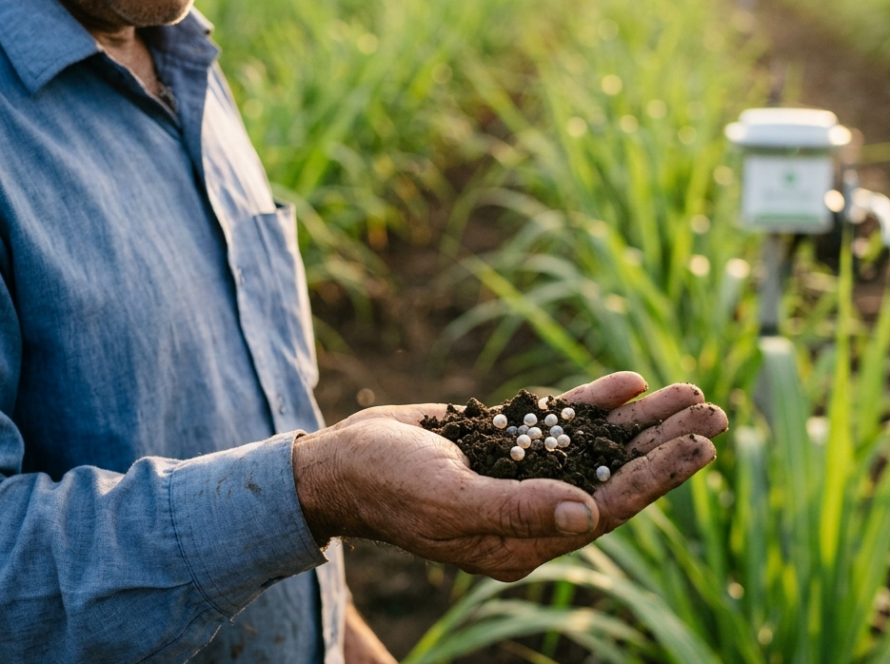
Surprising results were generated from PHA-based mulch trials conducted by farmers from southern Europe. Soil respiration improved after the film degraded midway through the growing season. Microbial diversity tests confirmed an increase of 23% of beneficial fungi in 2024 in an Italian test site when compared with fields using standard mulch probably because PHA’s matrix serves as a carbon source over an extended period rather than being an inert barrier.
Conventional agricultural plastic can be termed a lifeless input as it has no further functional value after completing its intended purpose. PHA-based packaging can be engineered to serve as a soil amendment after use, allowing for improved agricultural practices that contribute to the soil growth potential, thus generating a functional benefit to the land as opposed to simply creating a lower level of damage.
Where TerraPHA Enters the Field
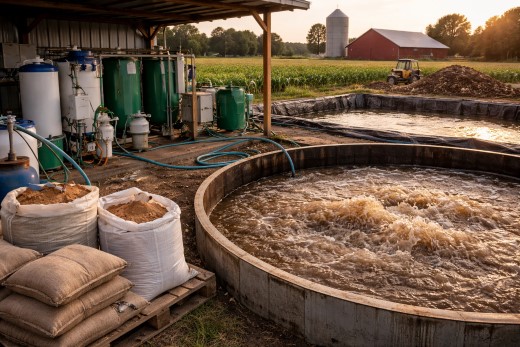
This is precisely the problem TerraPHA Biotech, is working to solve at an industrial scale.
As India’s first commercial non-GMO PHA biopolymer company, TerraPHA produces high-performance PHA that biodegrades naturally in soil, water, and even ocean environments without the requirement of specific controlled conditions. Their manufacturing process uses naturally occurring microbial systems and a wide range of renewable carbon feedstocks, making the supply chain resilient and genuinely circular.
TerraPHA’s products go beyond packaging alone. Their TerraCIDE-Herbo line doubles as a weed suppressant and slow-release carbon source; zero crop residue, ideal for organic and export-grade horticulture. Their TerraBIO-BS70 bio-stimulant rebuilds soil microbial architecture.
PHA market valuation worldwide stood at $97 million in 2023 and will grow to $200 million by 2028, with both regulatory demand due to the EU’s Single-Use Plastics Directive’s expansion to agricultural films and the frustration of agronomists who have had enough with the destruction of their topsoil driving the demand.
India itself produces around 3.4 million tonnes of agricultural plastic waste per year. India’s regulations on plastic waste management in 2022 have brought about an increased need for alternatives that can be used in agriculture.
Frequently Asked Questions
- Q) Is PHA packaging strong enough for real agricultural use like irrigation fittings, mulch films, seed bags?
Yes, as modern PHAs are developed to have equivalent mechanical properties to standard polyolefin products. Modifiers may alter the rigidity, elasticity, and UV stability based on application. Degradation is triggered only after the polymer is placed in contact with soil and does not occur before that point.
- Q) “Compostable” and “biodegradable” get used interchangeably. What’s different about PHA?
While both PLA and PBAT (industrial compostable) need 55 to 70 degrees centigrade industrial composting to biodegrade in a set timeframe, PHA is consumed by naturally occurring bacteria in soils even in room temperature. The latter does not need any specialized processing.
- Q) Will PHA packaging degrade too quickly in the field before it’s supposed to?
This is a valid concern during design. The rate of degradation of PHAs depends on their formulations. They could have molecular weight, copolymer compositions, and surface treatments that would prolong their service life for six, twelve, or twenty-four months before they start breaking down. Mulch films, which were already tested in the field, should last the entire growing period.