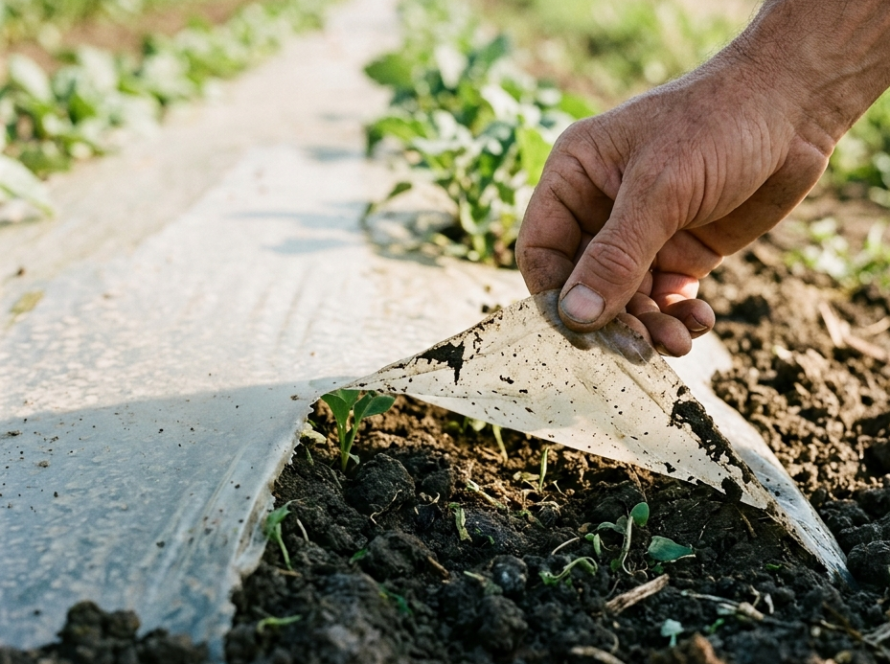
There’s an old farmer’s thing that whatever comes from the earth should return to the earth. For most of the 20th century, modern agriculture moved in the opposite direction which included burying fields under polyethylene, flooding soil with synthetic coatings, layering crop after crop with materials that would outlast the farmers themselves by centuries.
The Market Is Growing
In 2024, the biopolymers market was valued at close to $21 billion and is projected to exceed $50 billion by 2030, reflecting a compound growth rate that traditional industries would die for. Agriculture is a major application area of growth for biopolymers. They are used in everything from mulch films to irrigation tubing to plant pots and biodegradable coatings for seeds.
So, what has changed?
It was a combination of regulatory requirements, consumer pressures and advances in science. 50% of consumers now want biodegradable products, while 38% of all global research and development (R&D) dollars are being spent on biopolymer technology.
The Plastic Problem During Harvest
When you go for a walk in any large farm after the harvest is finished, you would see the same thing everywhere which is torn polyethylene mulch sheets caught up with harvested rows, doomed drip irrigation tubing that snaps and remains, and stacked plastic seed trays piled into skips.
A 2026 meta-analysis published in Nature Communications has determined that using plastic mulch increases crop yield by 28.7% and irrigation efficiency by 48.9% (evidently significant productivity increases). Nevertheless, the same analysis suggests that residual plastic can be found in the soil for several years and that both microplastics and nanoplastics can make their way into our food sources, leading to ecological problems and health risks which build up over time. This has always been true according to farmers, now confirmed by science, and offers farmers a way out.
The Materials Are The Change
Biopolymers are a type of polymer that is sourced from biological materials such as corn, sugarcane, and bacteria. While they are not new, the performance of biopolymers used as mulch has advanced. Soil biodegradable mulch films are viewed as environmentally friendly alternatives to conventional polyethylene mulch films, as they demonstrate significantly reduced greenhouse gas emissions and lower energy consumption throughout their life cycle.
Research published in npj Sustainable Agriculture in 2025 found that a novel multi-layer mulch film was created, using PBAT layer on the outside and thermoplastic starch in the centre. The newly engineered mulch film demonstrated approximately 64% mass loss after lab composting for 365 days compared to only 12% mass loss for a 100% PBAT mulch film. The practical impact of this data shows that, by the end of a single growing season, a grower will benefit from a mulch film largely decomposed into the soil as opposed to remaining as micro plastic fragments for several years post harvest.
Also, the USDA funded research that is being done on the next generation of nutrient-enriched mulch films. In 2024, USDA awarded $744,000 to fund a multi-year collaborative research effort to utilize biodegradable polymer film (i.e., PLA and PHA) sourced from renewable resources and incorporate nutrients beneficial to crops during degradation. The end result will be a mulch film that not only protects crops during its life span, but will also deliver nutrients to the soil during degradation.
Field Trials Results
Biopolymers, biodegradable plastic films are often scientifically proven through various peer-reviewed field trials to produce analogous results compared to traditional plastics in important ways relevant to farmers.
A study conducted over a multi-regional, multi-year period will examine onion production utilizing biodegradable films, where the area planted will produce onions just as effectively with biodegradable films compared to traditional polyethylene.
The data provided demonstrated that biodegradable films produced yields that exceeded non-mulched treatments (greater than 13%) when both were compared in similar conditions. However, as the associated comparisons represent only the metrics of soil pH and the physical characteristics of the soil, both of which do not demonstrate any statistically significant differences between the two treatments.
Moreover, biodegradable films continue to show equivalent rates of supporting crop growth, increased yield, and better water-usage efficiency (WUE), especially as WUE continues to decline due to a lack of available water sources resulting in an impending crisis.
Market Growth Scenario
The biodegradable mulch film will see substantial growth in the global market, increasing from an estimated $55 million in 2025 to $112 million by 2034 due to an increasing desire for sustainable farming methods and heightened government promotion of biodegradable materials.
With the enormous agricultural business that thrives in the Asia Pacific, and due to the rising pressure from governments to reduce plastic waste, the region is well positioned for adopting biopolymer technology. It is estimated that India will see the most growth in terms of agriculture-based biopolymers from 2021 to 2030. Western nations such as Europe have adopted circular economy policies, with an emphasis on biobased products for both agricultural and packaging purposes. In North America, research on biopolymer technology has risen by 35 percent in the past two years according to the US Department of Energy.
Frequently Asked Question
Q: Are biopolymer mulch films as effective as conventional plastic ones?
Indeed, the gap is shrinking. Several peer-reviewed research papers indicate that these films perform just as well in all key parameters such as crop yield, weed suppression, and moisture retention compared to their counterparts made from regular polyethylene, without leaving any contaminants behind after years of usage.
Q: What types of biopolymers are most used in agriculture?
The most popular are polylactic acid (PLA), polyhydroxyalkanoates (PHA), thermoplastic starch (TPS), and PBAT (polybutylene adipate-co-terephthalate). Currently, the greatest market share of around 36% belongs to starch blends, but the most rapidly growing are PHAs owing to their 100% biological nature and excellent sustainability characteristics.
Q: Why are biopolymers still more expensive than conventional plastics?
The two main reasons are the size of the manufacturing process and the price of raw materials. The cost of bioplastics can be two-and-a-half to seven-and-a-half times higher than that of petroleum-based materials, depending on the type. Nevertheless, with growing production capacities worldwide, particularly in North America and Asia, prices will likely drop significantly by the late 2020s.