Modern agricultural biotechnology is not yet merely a promise for the future, it is the foundation of how food will be grown globally. The value of the agricultural biotechnology market globally was over $151 billion in 2024, and is expected to reach $212 billion by 2030, increasing at a growth rate that reflects both genuine investor enthusiasm and actual adoption on each crop, in every field, across the world at a quickening pace.
The growth in the market is driven by advances in genetic engineering, genome editing through CRISPR-Cas9, and the use of microbial biotechnology to provide solutions for stress tolerances in crops and to produce bio-fertilizers and bio-pesticides to reduce the reliance on chemicals in crop production. All three of these technologies are not simply incremental improvements to the growing process. Rather, they represent a fundamental shift in how growers will view seed technology before it is even planted.
The CRISPR Moment
Ask any agricultural scientist what changed the game, and the answer is almost always the same i.e. CRISPR.
CRISPR-Cas systems allow scientists to precisely alter the genome of plants without adding foreign DNA, resulting in far greater acceptance from the public. This is a monumental difference because it allows for regulatory approval and commercialization of crops in significantly shorter periods of time (three years versus 10 years).
In terms of financial impact, genetic engineering (including both transgenic crops, CRISPR-based gene editing and RNA interference) will thus dominate the market for agricultural biotechnology by 2026, accounting for approximately 32.2% share.
For example, farmers are currently conducting field trials of drought-resistant maize varieties throughout sub-Saharan Africa, wheat varieties have been genetically engineered to resist fungal blight and tomato varieties were developed to remain viable longer in grocery store environments thereby significantly reducing the amount of food that must be discarded due to spoilage.
In early 2025, Bayer granted a license for a CRISPR-wheat variant with documented drought tolerance, a clear signal that gene-edited crops have moved from the lab bench to commercial readiness. Funding for agricultural startups specializing in gene editing technologies reached nearly double the amount raised throughout all of 2024 just within the first quarter of 2025.
Microbial Biotechnology
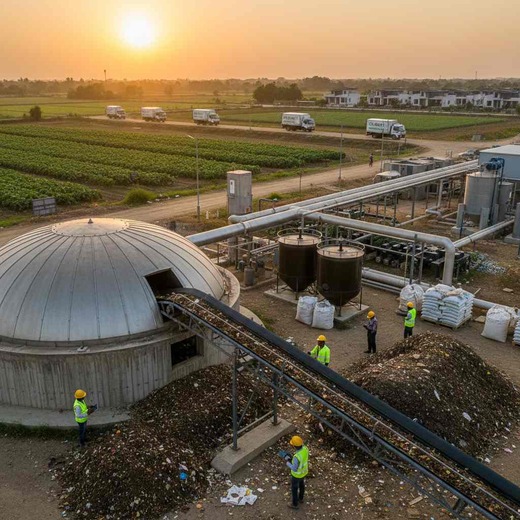
Engineering and deploying beneficial microorganisms as natural fertilizers and pest controllers is emerging as one of the most practical, scalable tools available to farmers today. Engineered strains like Azospirillum brasilense have been shown to enhance root elongation and nutrient uptake across multiple cropping systems, while Pseudomonas koreensis reduces plant pathogens in maize by producing antioxidant enzymes.
The presence of beneficial microorganisms in biological fertilizers assists in plant defence mechanisms and natural pest control, directly reducing reliance on synthetic pesticides. And the market reflects this shift, the global biofertilizer sector was already worth over $2 billion and growing at an 11% annual rate through the mid-2020s.
Companies like Pivot Bio and Indigo Ag have built entire platforms around engineered microbial consortia, organisms that fix nitrogen directly from the atmosphere and deliver it to plant roots, eliminating the need for synthetic nitrogen fertilizer in large portions of a grower’s acreage. For a commodity farmer, that’s not just an environmental win. It’s a margin win.
Precision Breeding
Beyond CRISPR technology and microorganisms, a third wave is forming, this time through the convergence of Artificial Intelligence (AI) and Genomic Data. New platforms using high-throughput phenotyping through drones, satellite-based remote sensing, and multi-omics are also allowing for precise multi-trait genome editing of major crops like maize, soybean, and wheat by utilizing AI to refine CRISPR target selections based on genomic analysis.
This process, often referred to as “Breeding 4.0,” allows for the overall compression of the 15-year field selection period to a 3-year cycle of development. A 1980s plant breeder would look at visual traits for selection (e.g., coloration, size, and structure) whereas a plant breeder today will use gene expression maps, climate stress models, and AI-driven predicted phenotypes to develop a plan before any seeds enter into the soil.
By 2025, it is estimated that around 60% of new crops will be engineered through genetic biotechnology for their enhanced resilience and productivity, a number that would have previously appeared to be unrealistic only ten years ago.
The Pressure Behind All
By 2050, global population will be around 9.8 billion. Land available for agriculture is becoming increasingly scarce. Groundwater supplies in some of the most important agricultural areas like the American Great Plains, the Indo-Gangetic Plain, north China are steadily depleting every year. Volatility in the weather pattern is rendering traditional agricultural belts unpredictable.
Advances in biotechnological technologies like CRISPR-based genetic modification, microbial inoculation, and selective breeding are contributing to high-yielding agricultural practices while also maintaining soil integrity and biodiversity thus, ensuring that agricultural biotechnology becomes one of the most integral facets of climate-resilient farming.
That is the actual revolution that we need and biotechnology does not just make our farmers grow more, it helps them grow more using fewer resources, such as water, chemicals, and converted land.
Frequently Asked Question
Q Is CRISPR-edited food the same as GMO food?
While similar, CRISPR food is not the same as GMO food. While GMO technology requires the insertion of genetic material from other organisms, which increases regulatory hurdles and public resistance, CRISPR editing allows for direct alteration of the existing genetic material of the crop without adding any foreign genes. In many cases, CRISPR-edited plants may be treated differently by regulators compared to traditional GMO crops, which greatly accelerates their time to market.
- Q) How do microbial biofertilizers actually improve yields?
Microbial biofertilizer increases the population of microbes that can either fix atmospheric nitrogen, dissolve phosphate, or produce growth hormones such as auxin and gibberellic acid. This improves nutrient accessibility for plants’ root systems without the use of artificial materials. Field tests in South Asia and Sub-Saharan Africa indicate an increase in yields even under stress from heat and drought.
- Q) Are these biotech tools accessible to smallholder farmers or just large agribusiness?
Availability is increasing very quickly. The second-generation biotech agriculture is now being planned explicitly with democratization in mind; cheap microbial inoculants, free-to-use gene-editing systems, and diagnostic kits compatible with smartphones are all part of this new wave of technology. An example of this is India’s BioE3 policy of 2025 which is financing bio-manufacturing facilities specifically for biotech input availability.