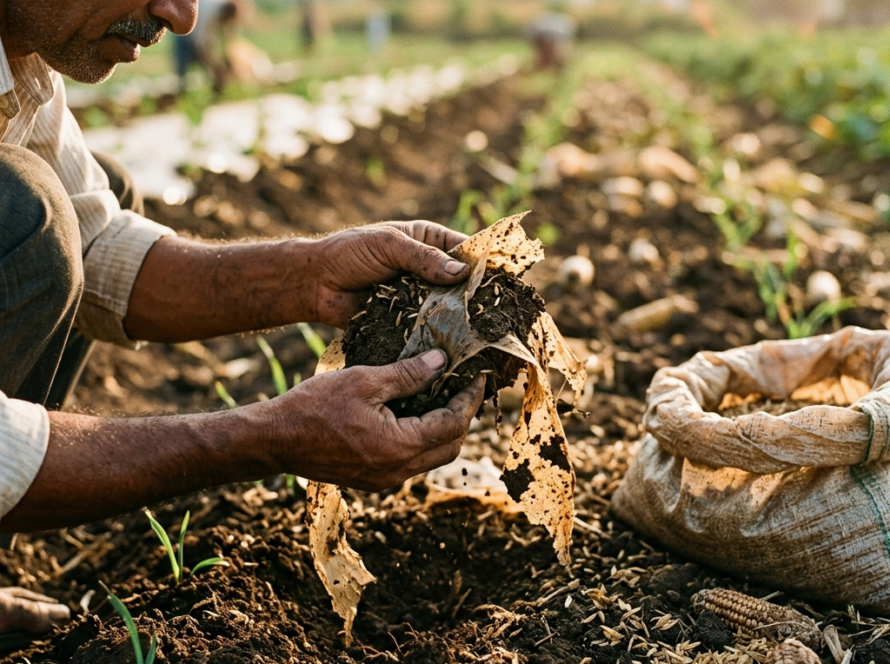
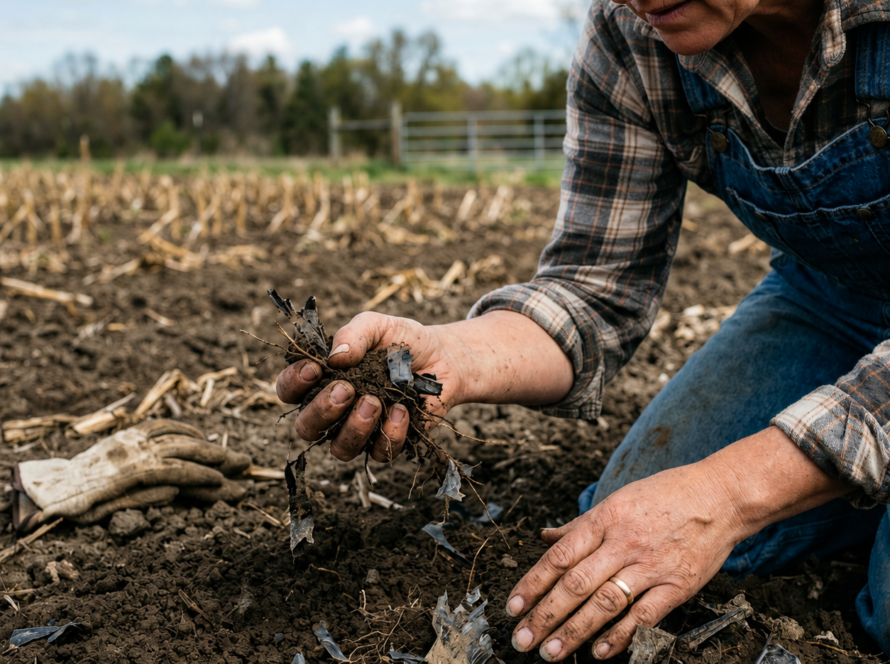
Packaging design flaw is repeating across millions of Indian farms every day, and it’s a big reason why animal feed packaging in India urgently needs to change.
Let’s go through an important question first,
What share of corn samples tested in poor-storage cattle-feed studies showed aflatoxin contamination?
The answer is that research on cattle feed storage has shown that over 80% of corn samples stored under poor conditions were contaminated with aflatoxins. Studies conducted in India have also reported that aflatoxin production increases rapidly when feed moisture exceeds 12.5-15%. It can reduce feed quality, affect milk and meat production, and ultimately lead to economic losses for farmers.
Packaging Hasn’t Kept Up With the Feed Market
The Indian compound feed industry is experiencing continuous growth. The industry is anticipated to have a value of around USD 15.4 billion in 2026 and is expected to grow to around USD 21 billion in 2031, with a compound annual growth rate (CAGR) of 6.4%.
In terms of the industry, the poultry sub-industry accounts for the highest share and contributes to almost 45% of the total feed volume.
India also holds the world’s largest cattle and buffalo population that is over 193 million cattle, 111 million buffaloes, and close to 900 million birds. Every day, enormous volumes of feed move from processing facilities to farm sheds in sacks that haven’t fundamentally changed in decades.
Why Feed Packaging Quality Affects Livestock Health and Farm Profit
Aflatoxin production accelerates dramatically once feed moisture crosses 12.5-15%. This is not just a small change as it can quietly affect milk and meat quality while reducing profitability on the farm.
Feed manufacturers invest significantly in developing nutritionally balanced formulations, incorporating probiotics, enzymes, and carefully optimized amino acid profiles. Yet all of that effort can be compromised if the feed is stored in packaging that:
- Absorbs moisture during transportation through humid regions such as West Bengal, Kerala, and coastal Andhra Pradesh, creating conditions that promote fungal growth.
- Allows heat and light to enter, leading to the breakdown of heat-sensitive vitamins such as A, D, and E.
- Can tear, crack, or leak during handling, resulting in the loss of expensive vitamin and mineral premixes.
- Contributes to the accumulation of plastic waste on farms, where proper collection and disposal systems are often unavailable.
Feed additives and supplements are among the fastest-growing segments in Indian formulation, expanding around 8% a year as companies move toward antibiotic-free, probiotic-laden diets. That innovation only holds up if the packaging around it is an equally effective shield against moisture in Maharashtra, or heat in Rajasthan.
India’s Plastic Packaging Rules Are Tightening in 2026
This is no longer just an animal health problem, but a compliance issue.
Under the Plastic Waste Management (Amendment) Rules, 2026, brand owners must register with the CPCB, meet recycled-content and EPR requirements, and demonstrate traceability through QR-coded packaging.
Material certified under IS 17088 (compostable) sidesteps the plastic-recycling burden entirely by exiting through composting instead. For feed companies packaging tonnes of product monthly, that distinction is the line between clean compliance and per-violation penalties ranging from ₹10,000 to ₹15 lakh.
Myth vs Fact: Feed Packaging Compliance in India
| Myth | Fact |
| “Biodegradable” on the label is enough | Only CPCB-certified IS 17088 (compostable) or IS 17899T (biodegradable) claims hold up legally |
| Plastic sacks are cheaper long-term | Spoilage losses from moisture and vitamin degradation often outweigh the sack’s upfront cost |
| Packaging innovation is a luxury add-on | It’s now an EPR compliance requirement, not optional |
How TerraPHA Biotech Is Solving India’s Feed Packaging Problem
TerraPHA Biotech, India’s first commercial biopolymer company, converts renewable feedstocks into non-GMO, fully biodegradable PHA-based materials engineered for the realities of Indian agriculture.
For animal husbandry and aquaculture, TerraPHA’s biopolymer-based feed supplement and packaging systems are designed to:
- Reduce dependence on chemical additives and antibiotics
- Support cleaner farm ecosystems
- Break down responsibly at end-of-life instead of lingering as plastic residue in soil or water
Because the material is produced through a controlled, low-impact fermentation process using diverse renewable carbon sources, it fits naturally into India’s circular economy push thereby helping feed and supplement companies get ahead of CPCB and EPR obligations instead of scrambling to catch up.
Frequently Asked Questions
Why does animal feed spoil faster in Indian conditions than in cooler climates?
High ambient humidity and temperature promote moisture absorption in conventional woven sacks which is precisely the conditions that enable fungi and aflatoxins to proliferate.
Is compostable feed packaging legally recognised in India?
Yes, but only if certified under IS 17088 by the CPCB. Uncertified “biodegradable” claims can still attract penalties under the 2026 Plastic Waste Management Amendment Rules.
Does biodegradable feed packaging cost more than plastic?
Upfront costs can be comparable or slightly higher, but total cost usually balances out once reduced spoilage, fewer compliance penalties, and lower EPR recycling obligations are factored in.