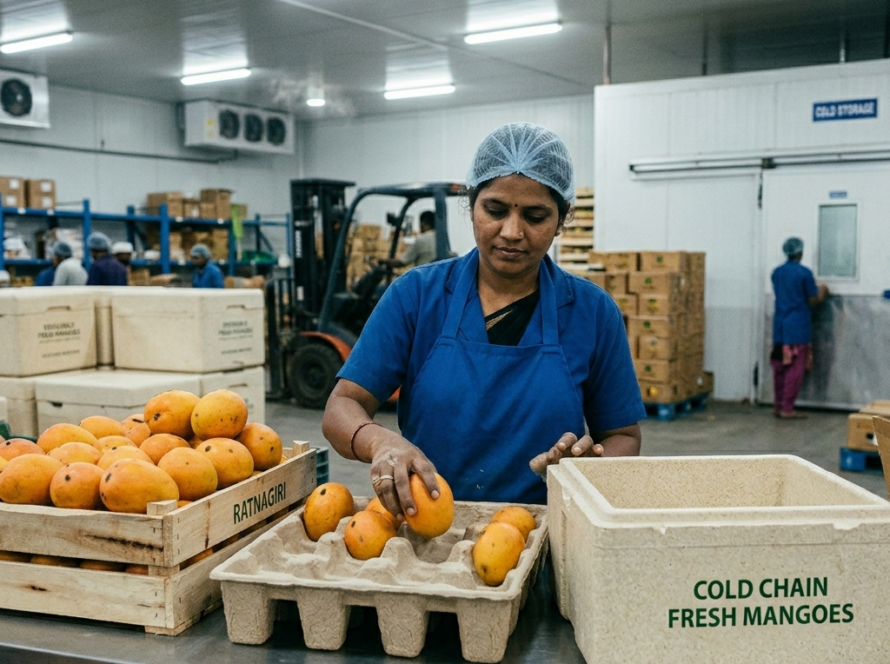
India grows enough food to feed itself several times over, yet a significant share of it never reaches a plate. For years, the public conversation around this has circled one word i.e. storage. The logic seems straightforward that build more cold storage facilities, and much of the problem will disappear. But government data and field-level research point to a far more complex reality. Food loss does not begin and end inside a warehouse. In many cases, the first and most critical failure happens much earlier, with something as seemingly simple as the package that carries the food from farm to market.
Two major government-backed studies form the foundation of what we already know.
The ICAR-CIPHET (2015) survey estimated annual losses of major crops at ₹92,651 crore, with individual commodities such as guava (15.05%) and tomato (11.61%) among the worst affected (Tribune India, 2025). The more recent NABCONS (2022) survey, presented in the Lok Sabha, recorded losses of 3.89–5.92% in cereals, 5.65–6.74% in pulses, and 2.87–7.51% in oilseeds, adding up to a national loss value of roughly ₹1.53 lakh crore about USD 18.5 billion every single year (Agriculture Institute, 2026; National Economic Forum, 2025).
These figures are more than percentages on a page. Behind every number is a farmer losing potential income, along with the water, fertiliser, energy and labour invested in producing food that may never be consumed. It is food lost long before it has a chance to reach the market or someone’s plate.
India’s Cold-Chain Structure
India’s cold-chain map is genuinely lopsided; around 60% of the country’s cold storage capacity sits in just four states, and only about 4% of the 10.40 crore tonnes of perishable produce moved every year travels in refrigerated vehicles (Bharatnama, 2025).
Storage issues are real. But cold storage can only preserve what arrives in good condition. It cannot undo the damage caused when produce reaches the warehouse already bruised, punctured, crushed, or otherwise compromised during handling and transportation.
The Package Is the First Line of Defence
Produce is damaged long before it meets a cold room. The Food and Agriculture Organization identifies four recurring mechanical injuries in fresh produce i.e. impact, vibration, compression, and puncture — nearly all traced back to inadequate packaging rather than temperature (FAO, n.d.).
Loose sacks and nylon bags with no ventilation trap the heat that produce generates simply by respiring, while sharp-edged crates cut and bruise it in transit. A recent review of losses in Indian fruits and vegetables lists poor packaging alongside manual harvesting and weak cold-chain infrastructure as a recurring, major cause and found that switching to ventilated plastic crates alone cut transit damage from double digits down to just 2-3% (Reddy et al., as cited in ResearchGate, 2023).
In other words, before food ever needs to be stored cold, it needs to be packed right.
Myth vs. Fact
“If India built enough cold storage tomorrow, post-harvest losses would disappear.”
Field data says otherwise.
A Gujarat supply-chain study found that most banana and mango losses at the wholesale level came from handling and mechanical injury during transport and packing, not from temperature failure (Estimating Post-Harvest Losses in Fruits Supply Chain in Middle Gujarat Region, n.d.). Packaging quality decides how much produce is even fit to store in the first place.
Rethinking the Package Itself
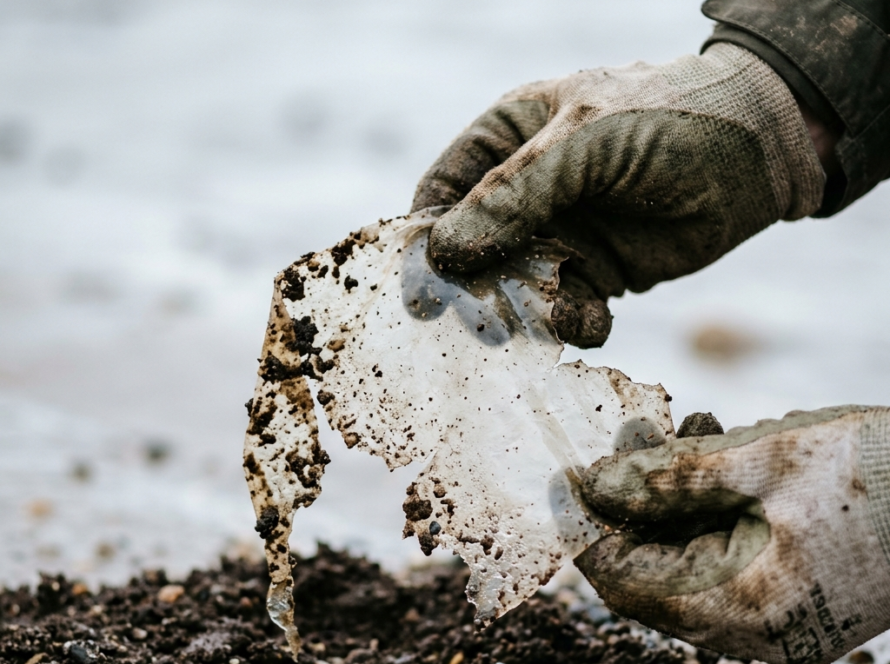
Conventional plastic crates and jute sacks solve neither the bruising problem nor the environmental one as most of the single-use plastic packaging persists in landfills and waterways for decades. This is the gap TerraPHA Biotech is built to close.
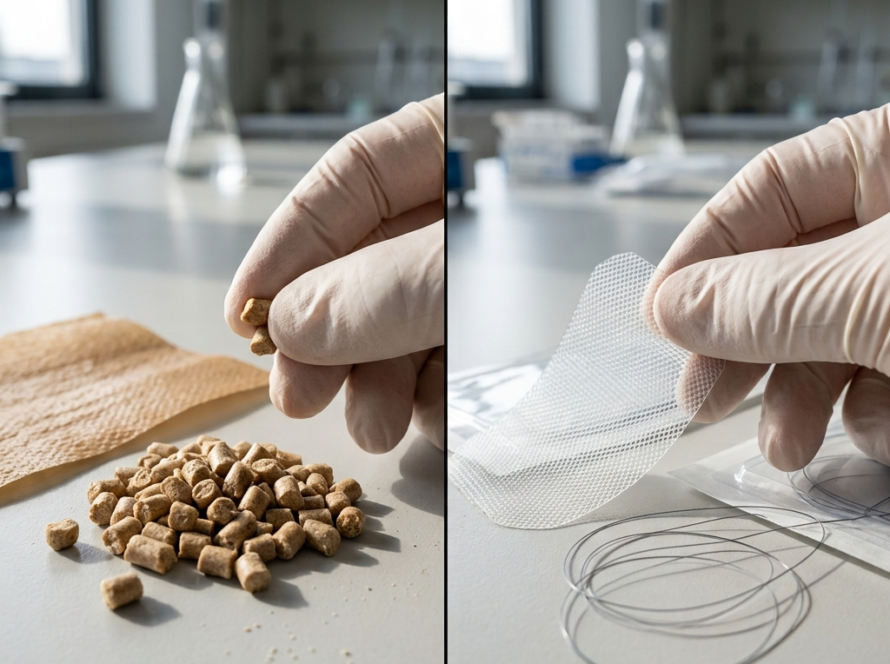
As World’s first commercial non-GMO biopolymer company, TerraPHA develops non-GMO, PHA-based biopolymers from renewable feedstocks, engineered for agricultural and food packaging use through a controlled, low-impact bioconversion process rather than petrochemical refining. Because these materials are fully biodegradable and produced from diverse renewable carbon sources, they support the kind of circular, waste-to-value packaging that reduces mechanical damage to produce while leaving no lasting plastic residue in fields, markets, and water bodies.
The Takeaway
Cold storage will always matter, and worth investing in. But treating storage as the whole answer misses where a large share of the country’s food is actually lost in the crate, the sack, and the truck bed, long before any warehouse door opens. Fixing packaging is not a side project to storage reform; it is the first, cheapest, and most immediate lever that has to protect what farmers have already grown.
Frequently Asked Questions
Does this mean cold storage investment isn’t important?
Not at all. Cold storage remains essential, especially for highly perishable produce. The point is sequencing: if produce is already damaged by poor packaging before it reaches a cold room, storage capacity cannot undo that loss. Packaging and storage need to be fixed together, not one instead of the other.
How much of India’s post-harvest loss is really caused by packaging?
No single national study isolates packaging as one clean percentage, because it interacts with handling and transport. But research consistently names poor packaging as one of the major recurring causes of loss in Indian fruits and vegetables, and interventions like ventilated crates have been shown to cut transit damage sharply (Reddy et al., as cited in ResearchGate, 2023).
What exactly is a PHA biopolymer, and how is it different from plastic?
PHA (polyhydroxyalkanoate) is a biodegradable material produced by fermenting renewable carbon sources with naturally occurring microorganisms, rather than refining it from petroleum. Unlike conventional plastic, it is designed to break down without leaving persistent residue, while still offering the structural protection produce needs in transit.
Can smallholder farmers realistically access better packaging?
Access is improving as biopolymer producers like TerraPHA scale up manufacturing and work with agricultural and packaging partners. As adoption grows and production volumes rise, sustainable packaging is becoming more available to farmer-producer organisations and packhouses, not just large exporters.
References
Agriculture Institute. (2026, March 15). Causes and prevention of post-harvest losses. https://agriculture.institute/food-fundamentals-fv/causes-prevention-post-harvest-losses/
Bharatnama. (2025, August 8). Why 60% of India’s cold storage capacity is concentrated in just 4 states? https://bharatnama.substack.com/p/why-90-of-indias-produce-still-moves
Estimating post-harvest losses in fruits supply chain in Middle Gujarat region. (n.d.). Agricultural Science Digest. https://arccjournals.com/journal/agricultural-science-digest/D-6112
Food and Agriculture Organization. (n.d.). Packaging for fruits, vegetables and root crops – 2. Packaging and post-harvest losses. https://www.fao.org/4/x5016e/X5016E02.htm
National Economic Forum. (2025, January 31). Addressing post-harvest losses in India: A silent crisis in agriculture. https://nationaleconomicforum.org/nef_articles/addressing-post-harvest-losses-in-india-a-silent-crisis-in-agriculture/
Post harvest losses of fruits and vegetables in India [Reddy et al.]. (2023). ResearchGate. https://www.researchgate.net/publication/374116896_Post_harvest_losses_of_fruits_and_vegetables_in_India
Techniques to reduce the post harvest losses of fruits and vegetables. (2023). ResearchGate. https://www.researchgate.net/publication/371253568_Techniques_to_Reduce_the_Post_Harvest_Losses_of_Fruits_and_Vegetables
Tribune India. (2025, February 25). Storage woes, farmers grapple with post-harvest loss. The Tribune. https://www.tribuneindia.com/news/india/storage-woes-farmers-grapple-with-post-harvest-loss-594651